
Brazil: Atlantic Forest
Join us as we explore the remarkable bird life in Southeast Brazil. The once-vast Atlantic rainforest holds a huge number of endemic species that we will be search for.




About this tour
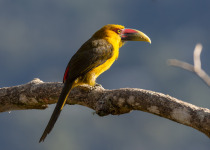
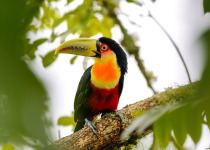
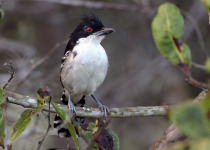
On this exciting new tour we’ll explore the remarkable bird life in Southeast Brazil. The once-vast Atlantic rainforest is not connected to the Amazon, and therefore it holds a mind-boggling number of endemic species. Spending lots of time at only a few sites allows us to counter the birding frenzy with enough downtime to be energized for the next outing! Prepare to be dazzled by the vibrant colours of tanagers, toucans, parrots, woodpeckers and hummingbirds. Then, get ready for the thrill of spotting many species of antbirds, antpittas, woodcreepers, tapaculos and ovenbirds that call this tropical paradise home.
This tour conveniently links up with our Amazon and Pantanal birding tour.
Itinerary ▼
We will meet as a group for dinner where we will discuss our birding adventure ahead
After breakfast we will drive for approximately three hours to Itatiaia National Park. We will spend the afternoon and next two days in this area. Itatiaia is one of the most famous destinations for birding in southeast Brazil and was the first national park in the country, created in 1937. Comprising 28,000 hectares and ranging from 600 to 2800 meters of altitude, this park provides a variety of habitats, from humid Atlantic Forest in lower elevations to mountaintop grasslands up high. This ensures a rich avifauna and a change in scenery from day-to-day.
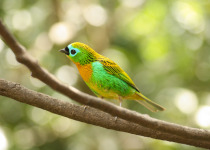
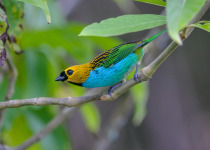
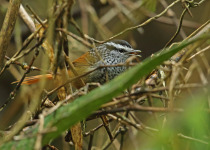
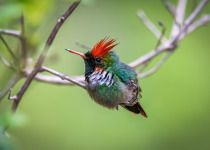
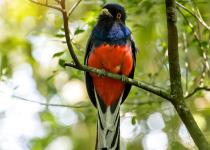
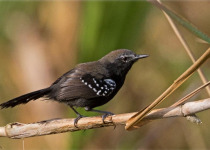
One of the special birds here is the namesake Itatiaia Spinetail, a bird of upper elevation grasslands. On the way up here, we’ll have the chance to see other highland species such as Rufous-tailed Antbird , the magnificent Black-and-gold Cotinga with its remarkable voice, Green-crowned Plovercrest, Bay-chested and Buff-throated Warbling-Finches, Mouse-colored Tapaculo, Great Pampa Finch, Blue-billed Black-Tyrant, Serra do Mar Tyrant-Manakin, Rufous-tailed Antthrush and more. In the lower elevations some of the targets include Gilt-edged and Brassy-breasted Tanagers, Ochre-rumped and Ferruginous Antbirds, White-collared Foliage-gleaner, Frilled Coquette, Surucua Trogon, Spot-breasted Antvireo, Eared Pygmy-Tyrant and many more. Well-stocked feeder set-ups will provide ample photographic opportunities and close-up views of tanagers, hummingbirds and others. Nights in Itatiaia.
Ubatuba is an ocean paradise with a mix of surf culture, weekend city escapees and a relaxed local scene. Aside from a beach atmosphere, this coastal zone has a wilderness feel, being backed by a magnificent, forested mountainside: the Serra do Mar. This steep-sided range is chock-full of endemic birds.
We’ll leave Itatiaia and head for the coast at Ubatuba over the sinuous roads on the upper part of Serra do Mar. En route we’ll witness the impact that farming has had upon the once-lush hillsides, but the closer we get to the coast, the more pristine rainforest we’ll encounter. It is indeed impressive. In fact, the Serro do Mar State Park encompasses 332,000 ha of protected jungle, much of it difficult to access.
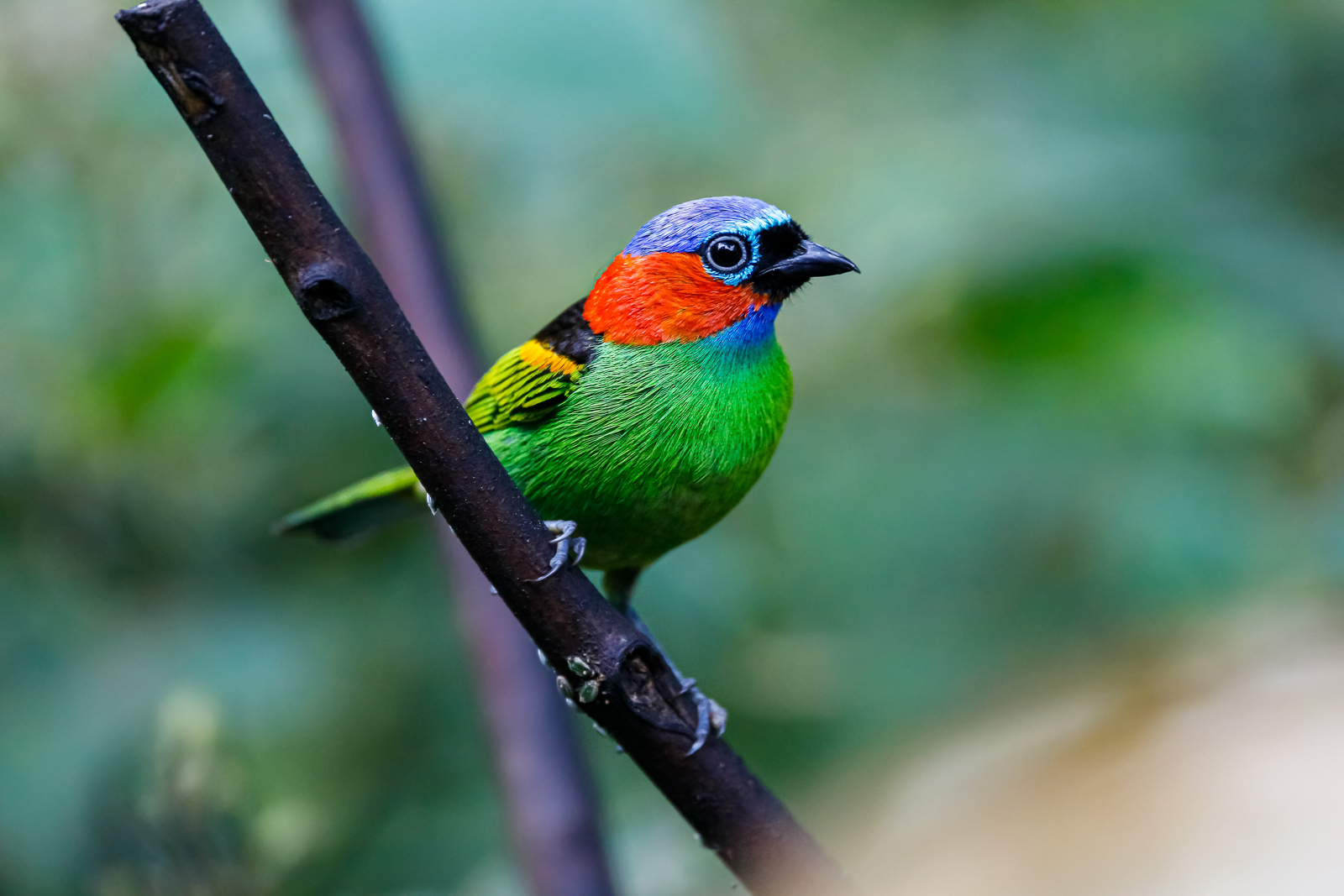
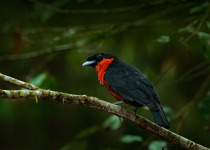
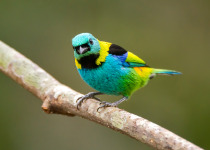
Bird species in Ubatuba we will look for include: Fork-tailed Pygmy-Tyrant, Riverbank Warbler, Sao Paulo Tyrannulet, Ochre-breasted Foliage-gleaner, Black-cheeked Gnateater, Red-necked Tanager, Green Honeycreeper, Pale-browed Treehunter, Buff-throated Purpletuft, Salvadori’s Antwren and Rufous-capped Antthrush.
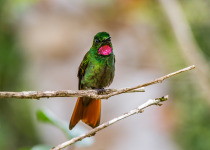
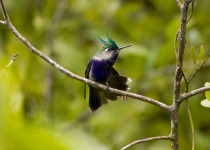
At feeders we could see the endemic Saw-billed and Scale-throated Hermits, Brazilian Ruby, Sombre Hummingbird, and Festive Coquette. Other hummingbirds include Glittering-throated Emerald, Black-throated Mango, Versicolored Emerald, Black Jacobin and White-chinned Sapphire.
Since this area holds some of the world’s most beautiful beaches, we should have a chance to dip our toes in the sand at some point. Nights in Ubatuba.
We will begin the morning birding close to the coast to try to pick up any lowland birds we haven't seen yet. We will then transfer to Salesópolis. This is one of the very few places in the world where you can see the critically endangered Marsh Antwren, described to science in 2014. The species is restricted to preserved wetlands surrounded by Atlantic forest.
Of course, a few other goodies are possible anywhere we stop, and in this case could include: Bertoni’s Antbird, Large-tailed Antshrike, Orange-breasted Thornbird, Drab-breasted Pygmy-Tyrant, Diademed Tanager, Red-and-white Crake and Spix’s Spinetail. Night in Salesópolis.
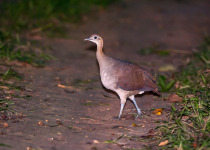
We’ll start with a relaxed morning at a wonderful feeder arrangement (with coffees in hand), watching and photographing some colorful tanagers and other birds such as Half-collared Sparrow and Brown Tinamou.
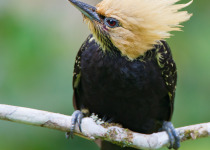
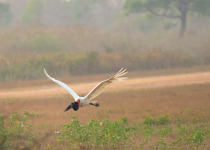
We’ll then head north for a short hiatus from the forest environment. The Tanquã wetlands are somewhat of a “mini-Pantanal,” offering exciting waterbird viewing. From the hard-to-miss Jabiru and Roseate Spoonbill to the secretive Yellow-breasted Crake and Spotted Rail, this area has much to offer. We’ll have a chance to explore some drier forest that may hold Helmeted Manakin, Ultramarine Grosbeak and Saffron-billed Sparrow, and many others. Night in Piracicaba.
This morning we will take a boat tour of the Tanquã wetlands and tally up an impressive list of ducks, herons, skimmers, terns, blackbirds, shorebirds, snipe, nighthawks and other open-country and dry forest species.
In the afternoon, we continue by van to the most diverse birding site in the entire Atlantic rainforest: Intervales State Park (~3.5hrs). As a UNESCO Natural World Heritage Site, Intervales is a critical parcel of protected mid-elevation rainforest. We will be sleeping and eating practically inside the forest, with minimal commuting required. Night in Intervales.
Intervales is excellent for birds, mammals, reptiles and botany. Some of the avian delights we might encounter here over three days include Variegated Antpitta, Short-tailed Antthrush, Spot-billed Toucanet, Squamate Antbird, Long-tufted Screech-Owl, Chestnut-backed Tanager, Crescent-crested Puffbird, Oustalet’s Tyrannulet, Ornate Hawk-Eagle, Pheasant Cuckoo, Hooded Berryeater, Red-ruffed Fruitcrow, Black-fronted Piping-Guan, Long-trained Nightjar and Blue-bellied Parrot. Jaguar, tapir, peccary, monkeys and three species of brocket deer are found in this vast forest, along with other mammals. Night in Intervales.
We will spend our last morning birding in Intervales, then drive ~4.5 hours to the airport in São Paulo, where you can catch your evening international flight home.
Availability & pricing
Included
- All accommodations (comfortable hotels in good birding locations)
- All meals and soft drinks
- Ground transportation (Bus or van with driver and AC)
- Airport transfers
- Eagle-Eye Tours guide + a local guide with 5 - 8 participants
- All park, conservation, entrance fees
Not included
- Travel to and from start/end location
- Travel Insurance
- Items of a personal nature
- Alcoholic beverages