
Costa Rica Sampler
Costa Rica hosts an incredible range of habitats and birds along with very good infrastructure. If you have limited time or want a shorter birding tour, this tour takes in the birding highlights of the country.
About this tour
Costa Rica is one of those magical places where nature takes the main stage. A small, peaceful country, it is covered in verdant rainforest within a vast network of national parks and private reserves. The name means rich coast, and on this tour we’re never too far from the Pacific or Caribbean. The famed beaches and coastal zones are indeed alluring, but it’s when we explore the mountains and foothills that the naturalist truly discovers the wealth of Costa Rica.
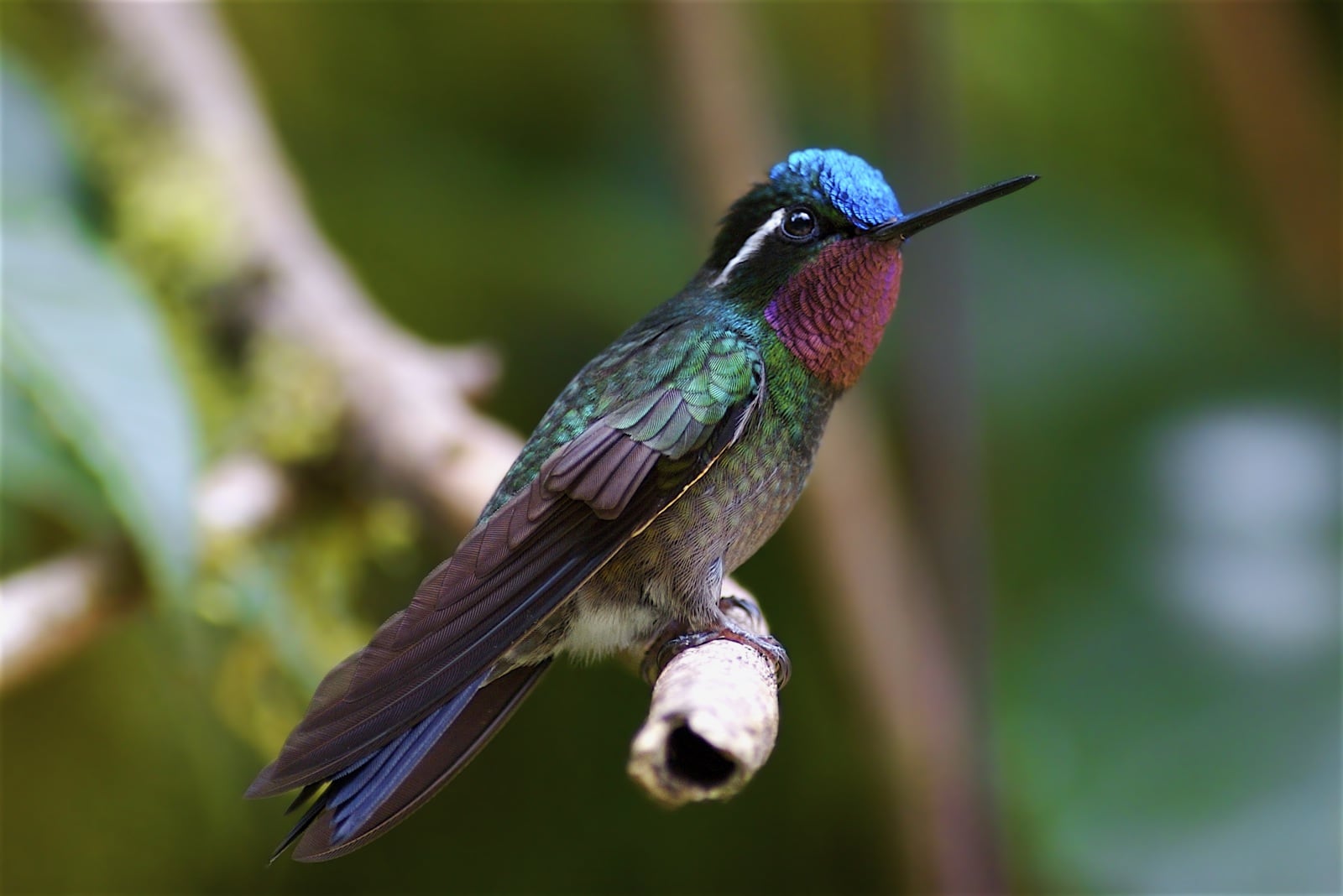
We’ll ascend to the cloud forests of the Talamanca mountains where hummingbirds and quetzals abound. We’ll spend ample time in the foothills on either side of the divide, with every zone offering a different suite of birds, from tanagers, warblers and flycatchers, to antbirds, woodcreepers, macaws and a mind-boggling array of other species. Mammals, reptiles and amphibians are well represented, and scenic vistas like the perfect cone of Arenal Volcano provide the backdrop.
We’ve designed our “sampler” itinerary so we don’t have to travel far between a select few lodges. From day one until the grand finale at La Selva, our expert guides will introduce birders of all abilities to everything Costa Rica has to offer!
Itinerary ▼
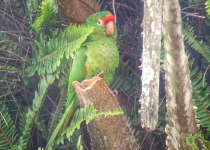
Our Costa Rica Sampler birding tour begins with a welcome dinner at the hotel, where you’ll meet your guides and fellow travelers. We’ll talk about what to expect in the coming days (hint: lots of birds!) and discuss some of the already-sighted tropical species hopping around the hotel grounds, such as Crimson-fronted Parakeet, Lesson’s Motmot and Clay-colored Thrush (Costa Rica’s national bird). Wintering migrants like Tennessee Warbler and Summer Tanager have joined us down here. After dinner we may take an optional walk to search for a pair of roosting Mottled Owls. Night in Heredia.
We set off early heading west to the Pacific coast near Puntarenas, which is a climatic boundary between the tropical dry forest to the north and wetter rainforest to the south. We’ll start with a picnic breakfast and birding in a mangrove forest—a good place to search for Mangrove Hummingbird, one of Costa Rica’s seven endemic bird species. Other representative birds include: Prothonotary Warbler, White-lored Gnatcatcher, Streak-backed Oriole and the raucous White-throated Magpie-Jay. We’ve seen the mangrove-loving Crab-eating Raccoon here.
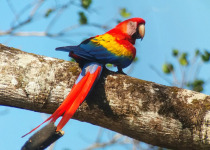
As we ease into our trip, we’ll enjoy lunch near a popular tourist area, then check in to our hotel where we’ll be staying for three nights. In the evening we’ll go out to find some other dry forest species, such as the critically endangered Yellow-naped Parrot, Cinnamon Hummingbird, and Scrub Euphonia. We should be treated to great views of the familiar yet always-exciting Scarlet Macaw. Night near Carara National Park.
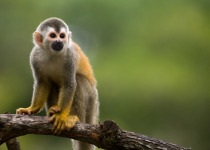
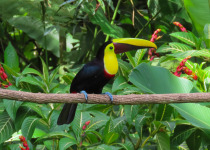
Carara National Park preserves a large tract of beautiful semi-evergreen forest. The birding here is world-class, and nearly half of Costa Rica’s bird species can be found here. If a mixed-flock passes by it can be electrifying, with a myriad of birds flitting through the canopy. This is when our guides are at their best, breaking down the action into memorable snippets. Stealth is required for some of the understory birds, such as lekking Orange-collared Manakin, singing Streak-chested Antpitta, and the seemingly fearless Great Tinamou. Meanwhile, Northern Bentbill, Northern Plain Xenops and Long-billed Gnatwren allow a comparison of cool-looking bird beaks. We’ll do an out-and-back hike, perhaps finding White-faced Capuchins and Geoffroy’s Spider-Monkeys or Ghost Bats roosting under palm leaves. We’ll hope for other tropical birds like Green Shrike-Vireo, Great Black Hawk, White-whiskered Puffbird and Rufous Piha. Eventually, a Yellow-throated Toucan will reveal itself, usually to much fanfare!
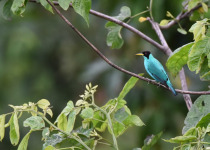
On our second day near Carara we’ll explore another section of the park and surrounding environs. If conditions are right, we’ll visit a small watering hole where we can view tropical birds bathing and drinking. We’ve seen both Red-capped and Velvety Manakins, and Green Honeycreeper up close. We’ll look for Baird’s Trogon in the mid-canopy, Gray-headed Tanager with mixed flocks, and two species of iguanas lounging in the parking lot. Last but not least, we’ll focus on finding one of Costa Rica’s many “regional endemics,” the photogenic Fiery-billed Aracari. This stunner, like many targets on this tour, ranges only from Costa Rica slightly into Panama. In the late afternoon we enjoy a boat trip into the mangroves along the Rio Tárcoles, a sit-back-and-relax adventure that is always a highlight. Although we have some targets on this trip (eg. Mangrove Vireo, Long-tailed Woodcreeper, Panama and Northern Scrub-Flycatchers, and Roseate Spoonbill), this is mostly a pleasant outing along some natural brackish estuaries. We’ll stop to watch American Crocodiles loaf along the river bank and perhaps view a Peregrine Falcon hunting Greater Fishing Bats at dusk. American Pygmy Kingfisher and Boat-billed Heron are often perched above the water’s edge, and Black Skimmers patrol the shallows. Nights near Carara National Park.
After some morning birding and breakfast, we will work our way back to the Central Valley, learning about Costa Rica’s culture and history as we pass by buildings of historical and religious importance, finally making our way to the town of Paraíso where we will look for two species of owls in the bustling town square. After lunch we will visit Cafe Cristina where we will do a tour of the farm and how Ernesto’s family produces organic, shadegrown coffee while providing habitat to as many species possible. After coffee and birds we will drive the short distance to our hotel for the night. Night near Paraíso.
The cloud forests and the alpine-like páramo of the Costa Rican Highlands are a spectacular and unique ecosystems, full of new birds. The vegetation is varied, with alder forests giving way to so-called elfin woodlands. Up here the trees drip with epiphytes and dew, and orchids are plentiful. The views are decent—from some summits it is possible to see both the Caribbean and the Pacific!
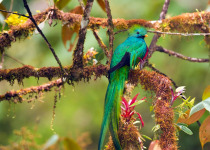
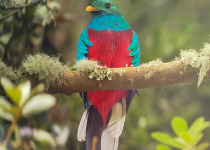
Today we will focus on our search for a new suite of highland birds. Some of these include: Ruddy Treerunner, Buffy Tuftedcheek, Black-capped Flycatcher, Collared Redstart, Large-footed Finch, Red-tailed Hawk, Golden-browed Chlorophonia and with luck, Long-tailed and Black-and-yellow Silky-Flycatchers. Our primary target, however, is the Resplendent Quetzal, a bird on most birders’ bucket lists. It is easily one of the most stunning animals in the world, and we sleuth out recent nesting sites to prioritize on finding this majestic beauty. If the weather permits we will explore the higher parts of the mountain to look for Volcano Junco, Flame-throated Warbler, Sooty Thrush, Fiery-throated Hummingbird and Talamanca Hummingbird. All of these are regional endemics, tied to the cordilleras in this part of Central America. Night near Paraíso.
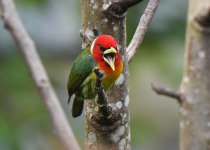
Today we will explore the middle elevation forests and valleys near Orosi and Cachí where we will look for mixed species flocks where we may find Common Chlorospingus, White-winged Tanager, Collared Trogon, Silver-throated Tanager, Scale-crested Pygmy-Tyrant, Red-faced Spinetail, Spotted Woodcreeper, Red-headed and Prong-billed Barbets. In the agricultural fields near Ujarrás we will look for one of Costa Rica’s endangered endemics, the Cabanis’s Ground-Sparrow and with some luck the unique Hook-billed Kite and the pair of Bat Falcons that live on the Cachí dam. If we feel up for a night drive we may find Common Pauraque and Striped Owl. Night near Paraiso.
Today we’ll commute toward Arenal and make a couple of stops along the way. We’ll keep an eye out for Red-breasted Meadowlark, Fasciated Tiger-Heron and Sunbittern. Driving several hours will then reset us in preparation for birding the famed Arenal Volcano area, where we’ll spend three nights getting to know a whole new avifauna.
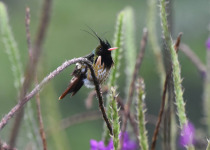
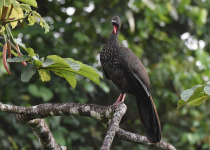
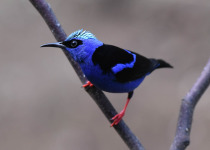
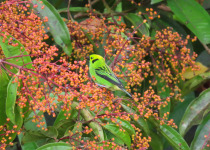
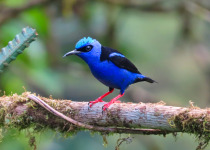
The Caribbean slope here offers the highest biodiversity in Costa Rica and perhaps all of Central America, so excitement awaits! At Arenal we will be spoiled with a dazzling array of tanagers, toucans, hummingbirds, and the photogenic Great Curassow, right from the dining area. The likes of Emerald and Bay-headed Tanagers, Red-legged Honeycreeper, Montezuma Oropendola and many others can be enjoyed along with a fresh coffee and plate of delicious fruit. After breakfast we walk the grounds, searching for Black-crested Coquette, Rufous Mourner, Stripe-breasted Wren, and hopefully a mixed-species flock containing a variety of antbirds (eg. Bicolored, Ocellated and Spotted Antbirds, Great and Russet Antshrikes) and, doubtless, some surprises from the trail network or the canopy tower.
After lunch, we stroll along a quiet mountain road (for traffic, not birds!) with views of the gorgeous Lake Arenal. This tactic allows plenty of viewing space for our group, and walking here is a pleasant way to spend an afternoon. One of our targets is Keel-billed Motmot, a canopy-dwelling beauty with a limited range and interesting call. Some of the more common species we might encounter are Bare-crowned Antbird, Bright-rumped Attila, Mistletoe and Yellow Tyrannulets, and Crimson-collared Tanager. Elusive targets include: Yellow-eared Toucanet, Rufous-winged Tanager, Great Potoo, Ornate Hawk-Eagle and Semiplumbeous Hawk.
On a night walk, we’ll search for a resident Black-and-white Owl, Spectacled Owl and some amphibians with bodacious names like Loquacious Tree-Frog, Savage’s slender-toed Frog and the postcard-worthy Red-eyed Leaf-Frog. It is not often jungle cats are sighted on a tour, yet the rare, nocturnal Margay has been seen frequently here. Nights: Arenal area.
Our itinerary allows for an outstanding finish to this adventure. We make a final stop at La Selva Biological Station alongside the Puerto Viejo River to see what the jungle has yet to reveal. This area is one of the better-studied tropical forests in the world so be prepared for the likes of snakes, sloths, monkeys, bats, anteaters, iguanas, and of course, more birds. Usually our local guide can point out a roosting owl or other dormant animals.
The list of incredible species in La Selva is daunting: Middle American Screech-Owl, Snowy Cotinga, Pied Puffbird, Fasciated Antshrike, Yellow-throated and Olive-backed Euphonias, Black-capped Pygmy-Tyrant, Scarlet-thighed Dacnis, Black-faced Grosbeak, Golden-hooded Tanager, Buff-rumped Warbler, the raucous Great Green Macaw, and many more. After all this it’s time for a cold drink, but after that we’ll check fields in the vicinity for the rare and lovely Nicaraguan Seedfinch. After a full morning of birding we drive up into the foothills to Cinchona where we will have lunch as we watch the amazing bird feeders where we have a chance of Northern Emerald Toucanet, Black Guan, Prong-billed and Red-headed Barbet, Crimson-collared Tanager, Silver-throated Tanager and Red-legged Honeycreepers, all with the amazing San Fernando Waterfall in the background. Finally, we commute to our cozy airport hotel, but even here we should encounter Ferruginous Pygmy-Owl and Spot-breasted Oriole. Eventually the birding winds down and we call it a wrap. Night near San Jose Airport.
Our Costa Rica Sampler birding tour finishes today. Breakfast is available and you can transfer to the airport for flights home at any time.
Locations & map
Open in MapsAvailability & pricing
Price: Price on request
Included
- All accommodation
- All meals and soft drinks
- Ground transportation (air conditioned bus with driver)
- 4 - 8 Participants will be guided by one guide. 9 - 12 participants will be guided by two guides.
- All park, conservation and entrance fees
- Gratuities to local guides and drivers
Not included
- Flights to and from San Jose
- Shuttle from airport to hotel on arrival in San Jose
- Travel Insurance
- Items of a personal nature
- Alcoholic beverages