
Costa Rica Birding
Costa Rica is a birding destination unlike any other. On our Costa Rica birding tour, we’ll visit all major habitats, sampling an astonishing variety of birds. F





About this tour
“Pura Vida” is Costa Rica’s unofficial national slogan—you’ll hear it instead of hola or gracias. It means Pure Life and it’s an apt moniker for this vibrant country, only the size of West Virginia or Nova Scotia but holding some of the highest levels of biodiversity on the planet. Indeed, with over 900 bird species recorded, and half-a-million other animal types, it is a compact ecological treasure chest begging to be opened. As a long-time tourism operator in Costa Rica we open up this world to our guests, providing an extensive outing that covers most of the country’s ecosystems. On our Costa Rica birding tour, we include two less-accessible hotspots not included in the Costa Rica Sampler tour— the Osa Peninsula and the Caño Negro wetlands—so birders and naturalists can observe a larger proportion of the country’s avifauna. If nothing else, this itinerary offers more time simply out birding, and should satiate even the most intrepid naturalists! Around 450 species is the norm for our checklist.
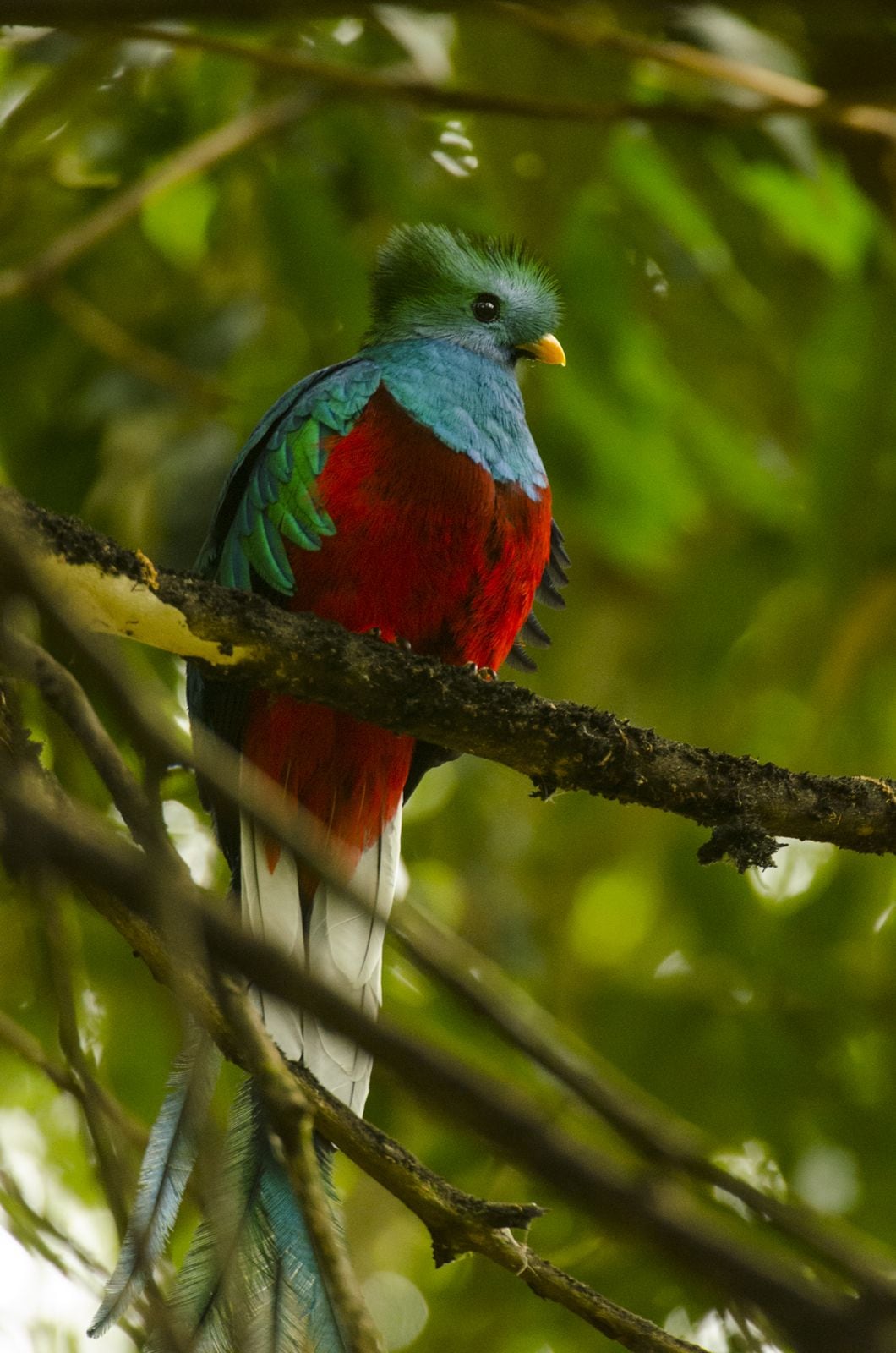
Only a few days into the trip you’ll discover why Costa Rica is a naturalist’s dream. We take you beyond the brochure-cover waterfalls and beaches, to hidden hotspots known only to our guides. Beyond the avian gems, the scenery is still breathtaking at these sites, too. Costa Rica with western Panama is a major centre of avian endemism, with nearly 70 species found nowhere else! Resplendent Quetzal is high on our list of target birds, but we also search for rarities like King Vulture, Cabanis’s Ground-Sparrow, Unspotted Saw-whet Owls and Hook-billed Kites, often using our connections with conservation projects and local farmers. We, in turn, support Costa Rica’s extensive conservation network through our visit.
Join us in the Talamanca Mountains, the Caribbean foothills, the Osa Peninsula, and other venues as we explore all of what Costa Rica has to offer, from birds to everything else, including the “Pura Vida” culture!
Organizer

Itinerary ▼
The tour begins with a welcome dinner at our hotel, where we’ll get prepped for the days ahead, discussing what to expect while meeting the leaders and fellow travelers on our Costa Rica birding tour. Depending on flight schedules we may bird the grounds, searching for Lesson’s Motmot, Rufous-naped Wren, Chestnut-capped Warbler, Mottled Owl and Costa Rica’s national bird, the Clay-colored Thrush. Night in San Jose.
We set off early heading west to the Pacific coast near Puntarenas, which is a climatic boundary between the tropical dry forest to the north and wetter rainforest to the south. We’ll start with a picnic breakfast and birding in a mangrove forest—a good place to search for Mangrove Hummingbird, one of Costa Rica’s seven endemic bird species. Other representative birds include: Prothonotary Warbler, White-lored Gnatcatcher, Streak-backed Oriole and the raucous White-throated Magpie-Jay. We’ve seen the mangrove-loving Crab-eating Raccoon here.
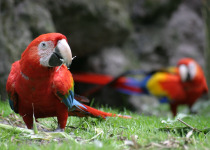
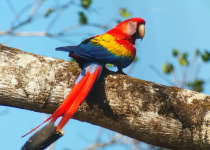
As we ease into our trip, we’ll enjoy lunch near a popular tourist area, then check in to our hotel where we’ll be staying for three nights. In the evening we’ll go out to find some other dry forest species, such as the critically endangered Yellow-naped Parrot, Cinnamon Hummingbird, and Scrub Euphonia. We should be treated to great views of the familiar yet always-exciting Scarlet Macaw. Night near Carara National Park.
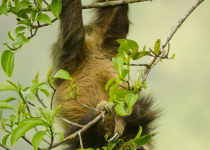
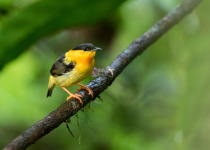
Carara National Park preserves a large tract of intact semi-evergreen forest and we spend a long morning here to explore the avian bounty. The birding here is some of the best around; in fact, almost half of Costa Rica’s bird species are on the local list. Some of the highlights include: Orange-collared, Red-capped and Velvety Manakins, several species of trogon, Northern Bentbill, Streak-chested Antpitta, Great Tinamou and Green Shrike-Vireo. We’ll do an out-and-back hike where we might observe some mammals too, such as White-faced Capuchin Monkeys in the canopy and Honduran White Bats roosting under “tents” they make from Heliconia leaves. We’ll hope for other tropical birds like Great Black Hawk, White-whiskered Puffbird and Band-tailed Barbthroat, one of the many hummingbirds we’ll encounter without hummingbird in the name! We’ll especially be on the lookout for the flashy Fiery-billed Aracari on this hike. In the late afternoon we enjoy a boat trip into the mangroves along the Rio Tárcoles, a sit-back-and-relax adventure that is always a highlight. Although we have some targets on this trip (eg. Mangrove Vireo, Long-tailed Woodcreeper, Panama and Northern Scrub-Flycatchers, and Roseate Spoonbill), this is mostly a pleasant outing along some natural brackish estuaries. We’ll stop to watch American Crocodiles loaf along the river bank and perhaps view a Peregrine Falcon hunting Greater Fishing Bats at dusk. American Pygmy Kingfisher and Boat-billed Heron are often perched above the water’s edge, and Black Skimmers patrol the shallows. Night near Carara National Park.
After breakfast we will pack the bus and drive up the road beyond the hotel where there is a phenomenal view of the Pacific Ocean and a great place to watch for raptors such as White Hawk, Gray Hawk, Zone-tailed Hawk, Double-toothed Kite, Gray-headed Kite and the spectacular King Vulture. After this, we drive southeast toward the famed Osa Peninsula, making a few birding stops enroute. We’ll spend three nights here, giving us enough time to enjoy the wild ambience of this corner of the country. Night near Corcovado National Park.
The Osa is a peninsula jutting into the Pacific and can be described as a “steaming jungle,” which may be a deterrent to your average tourist, but to avid birders is just the right kind of paradise. Of course, we do our best to start early when it is cooler, and rest during the afternoon. We’ll offer options for some owling and “herping” (looking for frogs and snakes) at night, too. For two mornings we birdwatch in various zones including mangroves, shorelines, wetlands and— the best part about the Osa— lowland primary rainforest. Our lodge is found right on the border with the beautiful Corcovado National Park so we won’t have to go far to find some incredible habitats to explore.
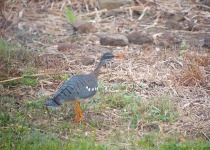
Some of the avian highlights in this segment are, of course, those difficult to find elsewhere: Yellow-billed and Turquoise Cotinga, Mangrove Hummingbird, Red-rumped and Golden-cheeked Woodpecker, Veraguan Mango, Uniform Crake and, an endemic species found nowhere outside of the Osa: Black-cheeked Ant-tanager. This one is found in the vicinity of army ant swarms, which are a magnet for other exciting birds like Chestnut-backed and Bicolored Antbirds, Gray-headed Tanager, Cocoa Woodcreeper and White-throated Shrike-Tanager. We look up to the sky in search of swifts: White-collared, Spot-fronted, Chestnut-collared, and Lesser Swallow-tailed Swift are found here.
We will also spend a day birding the La Gamba road where we will look for Brown-throated Parakeet, Sapphire-throated Hummingbird and Rusty-margined Flycatcher, just to mention a few! Nights near Corcovado National Park.
We’ll leave early for a sinuous and scenic drive from the coast, up and over Cerro de la Muerte along the spine of the Talamanca Mountains. We’ll bird our way along, stopping for some of the classic species of the Talamanca Range, which are numerous: Long-tailed Silky-flycatcher, Yellow-winged Vireo, Timberline Wren, Costa Rican Pygmy-owl, Golden-browed Chlorophonia, Flame-throated Warbler, Chiriqui Foliage-gleaner, Fiery-throated and Talamanca Hummingbirds. All of these are “regional endemics” restricted to this mountain spine that extends into Panama.
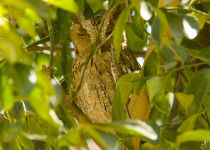
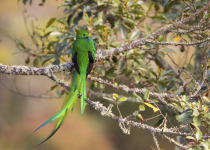
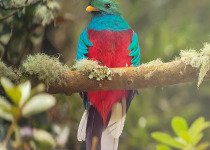
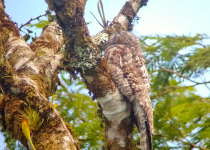
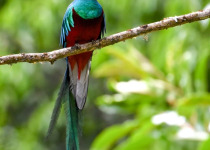
When we arrive at our hotel we’ll be ready to put our feet up, but only to recover for another day of highland birding. We can do this nearby our hotel the next morning, with excellent feeders and nearby elfin forest where we can hunt down Scintillant and Volcano Hummingbird, Black-capped Flycatcher, Dark Pewee, Collared Redstart, and Black Guan—more regional endemics! Our primary target, however, is the Resplendent Quetzal, a bird on most birders’ bucket lists. It is easily one of the most stunning animals in the world, and we sleuth out recent nesting sites to prioritize finding this majestic beauty. If the weather permits we will explore the higher parts of the mountain to look for Volcano Junco. We’ll have a chance to look for a duo of range-restricted owls: Unspotted Saw-whet Owl and Bare-shanked Screech-owl as well as Dusky. Nights in San Gerardo de Dota.
After breakfast we will bird a couple more highland sites, including the hummingbird feeders at Paraíso Quetzal Lodge. From here we will work our way back to the Central Valley, finally making our way to the town of Paraíso where we will look for two species of owls, Tropical-screech and Barn, in the bustling town square and usually great views of Crimson-fronted Parakeets. From here we will have lunch then visit Cafe Cristina where we will do a tour of the farm and how Ernesto’s family produces organic, shadegrown coffee while providing habitat to as many species as possible. After coffee and birds we will have lunch and drive the short distance to our hotel for some optional late afternoon birding. Night near Paraiso.
Before breakfast we will explore the scenic Ujarrás Valley where we will look for one of Costa Rica’s endangered endemics, the Cabanis’s Ground-Sparrow and with some luck the unique, snail-eating Hook-billed Kite and the pair of Bat Falcons that live on the Cachí dam. It is also a great area for hummingbirds including Blue-throated Goldentail, Blue-vented Hummingbird and Garden Emerald. After breakfast we will load up the van again and move on to a new habitat. Our next segment involves a visit to another impressive rainforest, but this time in the most biodiverse region of Costa Rica: the Caribbean slope and lowlands. We travel down to the lowlands with a number of stops along the way, including having lunch at La Hoja Garden for a delicious meal and enjoyable birding at the fruit feeders. We will arrive at our lodge in time for some optional birding on the hotel grounds. Night in Puerto Viejo de Sarapiqui.
La Selva biological station has been in operation for over 70 years and is administered by the Organization for Tropical Studies (OTS), making it a great place for learning more about birds and tropical ecology.
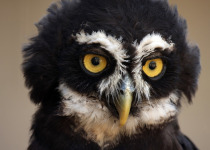
We’ll spend a morning birding this fantastic area with one of the local guides, whose local knowledge could help us find roosting owls (Middle American Screech-Owl or Spectacled Owl, for example) or perhaps even an Eyelash Pit-viper, which are known to sit waiting on a leaf for weeks at a time.
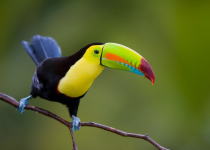
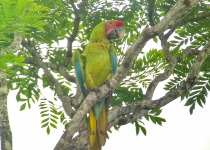
La Selva is simply a joy to experience and we’ll hope to encounter an army ant swarm, with up to five species of antshrike (including Fasciated and Russet), not to mention other goodies in the area like Sungrebe, King Vulture, Plain-colored Tanager, both Pied and White-throated Puffbirds, and of course Keel-billed and Yellow-throated Toucans. We’ll almost certainly have flyovers of the magnificent and endangered Great Green Macaw, and later we’ll explore the outskirts of the reserve where they are easier to see up close. Further afield is a special location for Nicaraguan Seed-Finch, a bird that has a proportionately larger bill than the macaw! Back at our hotel, the feeder setup draws in all sorts of tanagers, aracaris, and hummingbirds, making photography a snap. Night in Puerto Viejo de Sarapiqui.
After our second morning of birding around Sarapiqui for more species that are characteristic of lowland rainforest, including motmots, tinamous, cotingas and more we depart and head north to Caño Negro, fairly close to the Nicaraguan border. We make a few opportunistic stops along the way for species of open habitat such as Harris’s Hawk, Red-breasted Meadowlark and Nicaraguan Seed-Finch before arriving at the small village of Caño Negro for lunch where Red-legged Honeycreepers and Scarlet-rumped Tanagers entertain us. After checking into our lodge we will bird the village and look for Spot-breasted Wren and Gray-headed Dove. Night in Caño Negro.
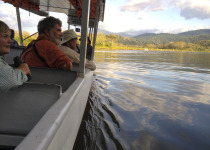
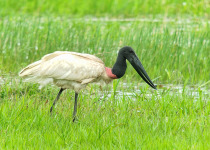
This morning we’ll take a boat trip around the extensive wetlands of Caño Negro. Water levels fluctuate from year to year but the bird action is always high. We’ll focus on seeing a few difficult species, two examples being the humongous Jabiru stork and the elusive Nicaraguan Grackle. Neither are easy to find but this part of the country is our best bet. Since we’re on a boat tour we’ll have a great chance to see all kinds of flamboyant—and buoyant—species, including Roseate Spoonbill, Russet-naped Wood-Rail, Black-bellied and Fulvous Whistling-Ducks, Purple Gallinule, Anhinga and White Ibis. This area is also great for owls (Pacific Screech-Owl, Striped Owl, etc.) and we’ll also hope to see the discreet Great Potoo perched on a roost. In the afternoon we’ll move toward La Fortuna and eventually Arenal. Night in Arenal.
We’re now back on the Caribbean Slope in what has become an iconic birding destination. This is an ideal location nearby the postcard-worthy Volcán Arenal. With three nights here we should catch a glimpse of the conical summit. Specialty birds of this area include: Black-crested Coquette, Rufous Mourner, Stripe-breasted Wren, and an array of antbirds (eg. Bicolored, Ocellated and Spotted Antbirds). In the vicinity we have found one of the most elusive birds in Costa Rica: the Rufous-vented Ground-Cuckoo, which is something every guide hopes for when encountering an army ant swarm, but luck is needed for this mythical bird to spring to life.
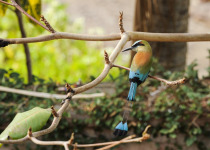
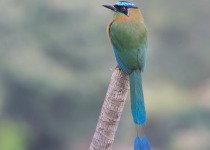
We’ll stroll in an area with beautiful views of Lake Arenal, searching for Keel-billed Motmot, Bare-crowned Antbird, Bright-rumped Attila, Brown-capped Tyrannulet, and Crimson-collared Tanager. With luck we could also find Yellow-eared Toucanet, Rufous-winged Tanager, Ornate Hawk-Eagle and Semiplumbeous Hawk.
The area is well-suited for night walks. We’ll search for a resident Black-and-white Owl, in addition to a few species of amphibians, especially the Red-eyed Leaf-Frog. On our last afternoon we’ll commute back to San Jose to a conveniently-located hotel near the airport. Not to worry, we still have target species here, including Spot-breasted Oriole, Crested Bobwhite and Ferruginous Pygmy-Owl that are present on the grounds. Nights: Arenal, except last night in San Jose near the airport.
The Costa Rica birding tour finishes today. Breakfast is available, but you can take an airport shuttle to catch your flight home anytime today.
Availability & pricing
Included
- All accommodation (basic to very good accommodation)
- All meals and soft drinks
- Ground transportation (Air-conditioned bus with driver)
- 1 guide with 4 - 8 participants, 2 guides with 9 - 12
- All park, conservation and entrance fees
Not included
- Flights to and from San Jose
- Shuttle from airport to hotel on arrival in San Jose
- Travel Insurance
- Items of a personal nature
- Alcoholic beverages