
Red Panda Special & Birds of North Bengal
The mix of broadleaf and coniferous forests of the Neora Valley National Park provide fantastic birding and a great introduction to the Eastern Himalayas, with birds typically a little more confiding than in the further reaches of Arunachal Pradesh for example.
About this tour
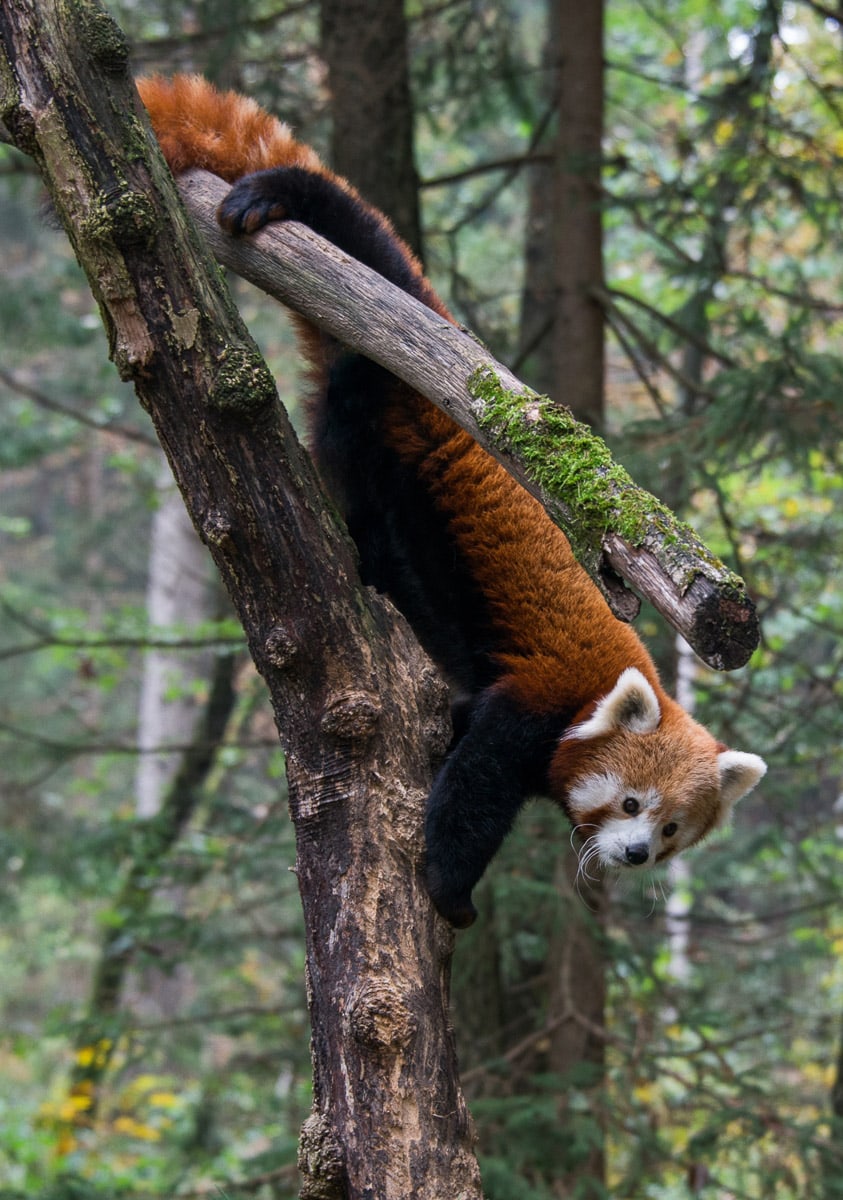
The mix of broadleaf and coniferous forests of the Neora Valley National Park provide fantastic birding and a great introduction to the Eastern Himalayas, with birds typically a little more confiding than in the further reaches of Arunachal Pradesh for example. Coupled with the magnificent Singalila National Park, where there is a very good chance of seeing the cutest of mammals, the Red Panda, and this is a marvellous wildlife tour.
We start this tour in the foothills of the Himalayas, between the Teesta and Mahananda rivers, at Mahananda Wildlife Sanctuary. A wide variety of species, such as Red Junglefowl, Small Pratincole, Crested Treeswift, Green-billed Malkoha, Red-breasted Parakeet, Oriental Pied and Great Hornbills, Little Pied Flycatcher and Orange-bellied Leafbird, is an excellent way to kick off our species list.
From Mahananda we ascend slightly to the town of Lava and the nearby Neora Valley National Park. We have two full days here which will allow us to explore both upper and lower ridges of the Neora Valley, as well as several birding trails in the general vicinity, such as near Rishop, Kolakham and Raset, and the Lava to Algarah road. Birds could include Mountain Hawk Eagle, Himalayan Cutia, Red-headed Trogon, Golden Babbler, Himalayan Shrike Babbler, Rufous-throated Wren Babbler, Rufous-necked Laughingthrush, Rusty-fronted Barwing, Black-faced Warbler, Rufous-breasted Accentor, Rusty-bellied Shortwing, Black-throated Parrotbill, Blue-fronted Robin and Little Bunting.
From Neora Valley we will spend a short time in Darjeeling, including a birding visit to the extensive bamboo forest around Tiger Hill, where we may find Spotted Laughingthrush, Slender-billed Scimitar-Babbler, Golden-breasted Fulvetta, Broad-billed Warbler, Gould’s Shortwing, Black-throated and Brown Parrotbills and White-tailed Robin.
After Darjeeling we head to Singalila National Park, first to Manebhanjan where we transfer into Land Rovers to continue the rugged ascent into the National Park. Singalila sits directly on the India – Nepal border. Its mix of temperate and alpine vegetation, with beautiful flora including rhododendrons, magnolia and many orchids, is home to the elusive Red Panda, and this is by far the best place in India to find them. We will look for them each day, with the help of local trackers, but not exclusively, for this is a wonderful birding location too.
Satyr Tragopan occurs in these forests but is mostly heard in the spring, and rarely seen. However we have a decent chance of encountering other good birds such as Rufous-throated Partridge, Crimson-breasted, Darjeeling and Bay Woodpeckers, Golden-throated Barbet, Brown Wood Owl, Ashy Wood Pigeon, Mountain Imperial Pigeon, Black Eagle, Mountain Hawk Eagle, Black-throated Thrush, Rufous-gorgeted Flycatcher, White-gorgeted Flycatcher, Yellow-browed Tit, Fire-breasted Flowerpecker, Fire-tailed Sunbird, White-browed Bush Robin, White-tailed Robin, Striated Bulbul, Chestnut-headed Tesia, Chestnut-crowned Warbler, Black-faced Warbler, Maroon-backed Accentor, Black-faced Laughingthrush, Dark-breasted Rosefinch and Gold-naped Finch.
This Bubo Birding itinerary is available through BirdWatch.info as a private or custom departure. Current dates, exact routing, accommodation and final price should be confirmed after inquiry.
Itinerary ▼
The tour starts from Kolkata, with some local birding depending on flight arrival time, and the night spent at a comfortable hotel. If you are arriving internationally at a different airport, e.g. Delhi, you may need to come a day earlier: we can provide accommodation and airport transfers if required.
From Kolkata we fly to Bagdogra and make the short drive to Mahananda Wildlife Sanctuary for afternoon birding. Species variety in this lowland forest is excellent, and we can expect to see a wide variety of species, such as Red Junglefowl, Small Pratincole, Crested Treeswift, Green-billed Malkoha, Red-breasted Parakeet, Oriental Pied and Great Hornbills, Little Pied Flycatcher and Orange-bellied Leafbird.
Morning and afternoon sessions will enable us to explore different parts of the sanctuary. Additional birds could include Rufous-necked and Great Hornbills, Asian Emerald Cuckoo, Long-tailed Broadbill and Common Green Magpie.
We leave early this morning to bird in our only wetland habitat of the trip, at the Gajoldoba barrage on the River Teesta. This wide river supports large numbers of birds, and a small wetland area by the barrage concentrates many of the ducks and other waterbirds, including a remarkable number of Indian rarities. In recent years wildfowl have included Taiga or Tundra Bean Goose, Greater White-fronted Goose, Eastern Spot-billed Duck, Falcated Duck, Baikal Teal, Common Goldeneye, Greater Scaup, Long-tailed Duck, Smew and Red-breasted Merganser! Other birds we may see include Black-necked Grebe, Great Thick-knee, Grey-headed, Northern and River Lapwings, Small Pratincole, Pallas’s Gull, Pied Harrier, Collared Falconet, Sand Lark, Striated Grassbird, Siberian Rubythroat, Citrine Wagtail, and Rosy and Richard’s Pipits. We then head for the Neora Valley National Park from Kolakham village, a few km from the small town of Lava. The surrounding forest trails in this area, as well as the various small roads, are very good for birding.
The Lava area is well-known for birding site and we will spend two days exploring much of the area. Birding on the Lava to Algarah Road itself can be good, as can a trek up the trail leading from behind the Forest Rest House to Tiffindara and the semi-evergreen forests of the National Park itself, between 1,600 m and 2,700 m. Our two days should enable us to connect with lots of good birds, maybe including Eurasian Woodcock, Crimson-breasted Woodpecker, Brown Wood Owl, Himalayan Cutia, Black- and Red-throated Thrushes, White-browed Bush Robin, White-tailed Robin, Winter Wren, Maroon-backed Accentor, Chestnut-crowned and Black-faced Warblers, Chestnut-crowned and Black-faced Laughingthrushes, Scaly-breasted and Pygmy Wren Babblers, Rusty-bellied Shortwing, Black-headed and White-browed Shrike Babblers, Rusty-fronted Barwing, Rufous-winged Fulvetta, Fire-breasted Flowerpecker, Fire-tailed Sunbird and Gold-naped Finch.
Today we enjoy our last birding in the Neora Valley before leaving for the quaint hill station of Darjeeling, ‘The Queen of Hills’. Here we will arrange our permits for Singalila National Park, whilst enjoying some leisurely birding in the environs of the town and maybe some sightseeing, including a ride on the famous Darjeeling ‘toy train’!
Tiger Hill is famous as a sunrise viewing point not far from Darjeeling. It reaches a height of 2,485 m and on a clear morning one can get spectacular views of the Kanchenjunga range. Unfortunately, it attracts a lot of tourists, so we will avoid the crowds by exploring the dense ringal bamboo and oak forests on the hill, hoping to find birds such as Yellow-billed Blue Magpie, White-collared Blackbird, Gould’s Shortwing, Yellowish-bellied Bush Warbler, Broad-billed Warbler, Spotted and Blue-winged Laughingthrushes, Golden-breasted Fulvetta and Brown Parrotbill. After our early morning at Tiger Hill we head to the Singalila National Park, first via the border town of Manebhanjan where we will transfer to more rugged Land Rovers and clear our forest permits.
Singalila National Park in the northwest of West Bengal is directly on the India – Nepal border. This high-altitude forest of thick bamboo, rhododendron and oak includes several well-known trekking routes, and the views are stunning. On a clear day it is possible to see four of the five highest mountains in the world, namely Mount Everest, Kanchenjunga, Lhotse and Makalu. Singalila is home to the elusive Red Panda, and this is by far the best place in India to find them. We have five full days to explore the area, which should give us more than a 50% chance of finding a Red Panda. This will be a combination of tracking on foot and by Land Rover, and will enable us to get as far as the Sandakphu summit at over 3,600 m. Sandakphu means ‘Height of the Poison Plant’, a reference to the toxic aconite plants, or ‘Wolf’s Bane’, that are found here. Birding throughout the National Park will be excellent, and we will try to seek out some of the real specialities here, such as Satyr Tragopan, Blood Pheasant, Fulvous, Brown and Great Parrotbills, Scaly and Spotted Laughingthrushes, Scaly Thrush, Rosy Pipit, and White-throated Redstart.
We depart Singalila for the drive back to Bagdogra and on to Kolkata or Delhi. If time permits we’ll do some birding en route at Mirik Lake, which could even produce Black-tailed Crake if we are lucky! For those continuing on to Delhi, we can provide accommodation in Kolkata or Delhi depending on flight timings.
Locations & map
- North Bengal - West Bengal India (Conditions vary by season and exact route.)
Included
- Experienced local birding guide support - Exact guide assignment to confirm.
- Tour services described in the confirmed itinerary - Final inclusions are set in the operator quotation.
Not included
- International flights - Not included.
- Visa, travel insurance and personal expenses - Traveller responsibility.
Transport & stays
- Private ground transport and domestic connections Exact vehicle, flight and transfer plan to confirm for the chosen itinerary. | Pickup: Airport or hotel pickup where included in the confirmed plan.
Policies & FAQ
Can this tour be arranged privately?
Yes. Bubo Birding states that its published itineraries can be arranged as private trips, with dates and details tailored to the group.
Are the price and itinerary final?
No. Current availability, group assumptions, accommodation, exact routing and the final quotation should be confirmed after sending an inquiry through BirdWatch.info.