
Kashmir and Ladakh Spectacular
Summary: A special three-week tour bringing the top sites, birds and mammals, of Kashmir and Ladakh. Sites to be visited and key bird targets include Gulmarg, Sonamarg and the Daksum Valley (Kashmir Flycatcher, Kashmir Nutcracker, Kashmir Nuthatch, Orange Bullfinch, Spectacled Finch) in Kashmir, and…

About this tour
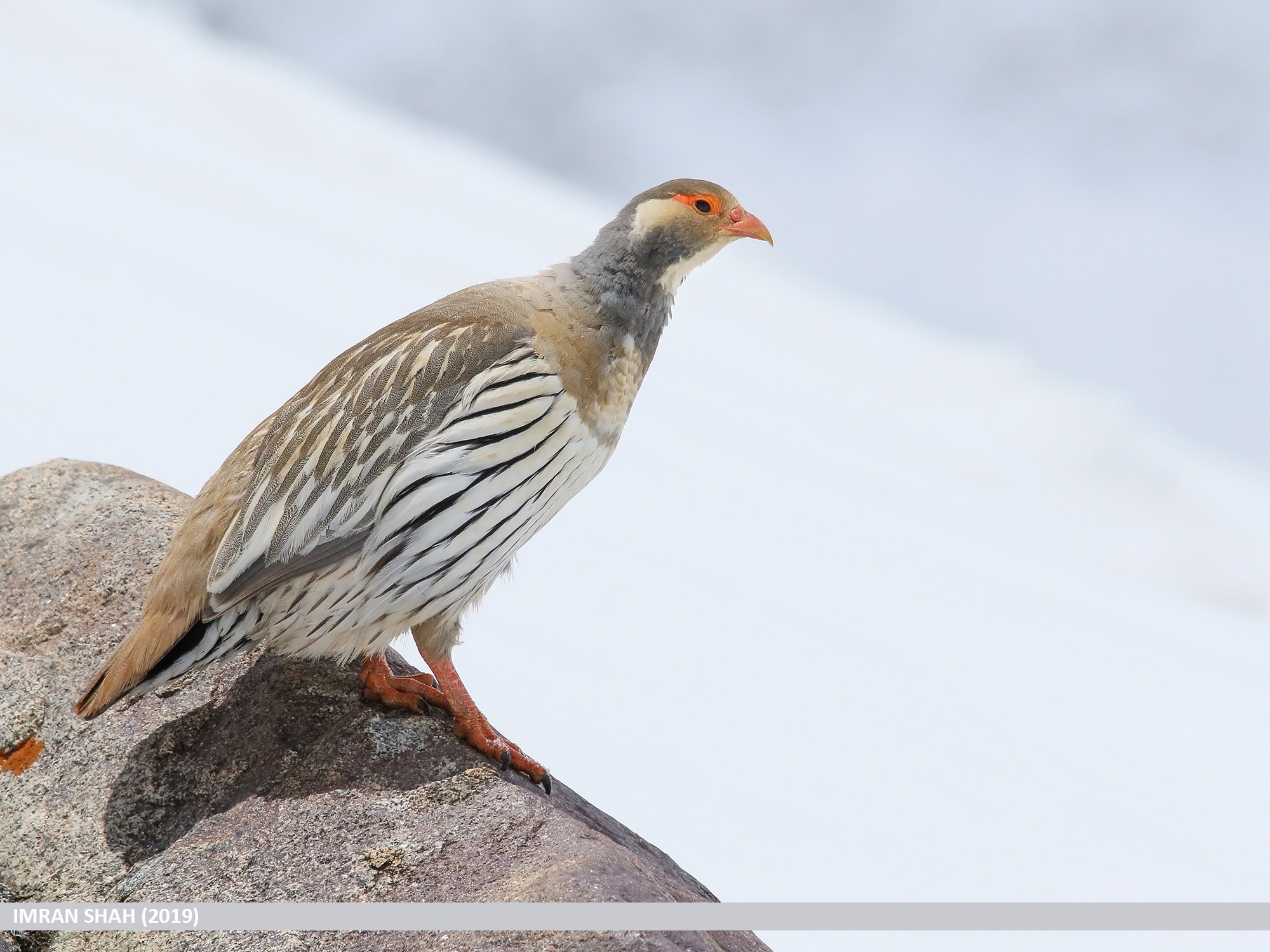
Summary: A special three-week tour bringing the top sites, birds and mammals, of Kashmir and Ladakh. Sites to be visited and key bird targets include Gulmarg, Sonamarg and the Daksum Valley (Kashmir Flycatcher, Kashmir Nutcracker, Kashmir Nuthatch, Orange Bullfinch, Spectacled Finch) in Kashmir, and in Ladakh Dras (Brown Bear), Suru Valley (Long-billed Bush Warbler), Leh (Ibisbill), Nubra Valley (Pale Rosefinch, White-browed Tit Warbler, Pied Wheatear), Wari La and Chang La (Tibetan Snowcock, Himalayan Snowcock, Tibetan Partridge), Hanle (Ground Tit, Tibetan Lark, Tibetan Sandgrouse, Eurasian Eagle Owl, Brown Accentor, Chinese Rubythroat), and Tso Kar (Black-necked Crane, Upland Buzzard, Bar-headed Goose, Tibetan Sand-plover, Black-winged Snowfinch).
Kashmir and Ladakh at the northern extreme of the Indian Subcontinent, across the Himalayas, offer a stark contrast to the rest of the country, in landscape and culture as well as birds and wildlife. The location attracts migrants from northern parts of the Palearctic, and there are several vagrant species seldom seen anywhere else in India. However, we will be mainly concentrating on localised breeding species, such as Black-necked Crane, Ibisbill, Kashmir Nuthatch, and Kashmir Flycatcher, plus the recently rediscovered Long-billed Bush Warbler.
A few days based in Srinagar will be spent exploring surrounding forests and valleys. We have some flexibility in the plan and will cover some of Dachigam National Park, Gulmarg , Yousmarg, and Daksum. Both Kashmir and White-cheeked Nuthatches occur here, along with Kashmir Nutcracker, Kashmir and Rusty-tailed Flycatchers, Rufous-naped Tit, Black-and-yellow Grosbeak and Tytler’s Leaf Warbler. We will make particular efforts with an overnight stay in the Daksum Valley to find two amazing finches –Spectacled Finch and the very local Orange Bullfinch.
We travel overland from Kashmir to Ladakh which allows us to acclimatise to the high altitude of Leh at over 3,500 m. En route we have important stops not far from Kargil. The first is at Dras, known for its regular sightings of Brown Bear. However, at this time of year we will need some luck as we have just one night, instead concentrating on something just as brown, but much smaller and rarer! – the recently rediscovered Long-billed Bush Warbler in the Suru Valley.
From Leh we initially go north for an excursion into the Nubra Valley where two key species are White-browed Tit Warbler and, recently discovered in India, Pale Rosefinch. Mammals should include Cape Hare and maybe even Lynx, with Bactrian Camels a relic of the old Silk Route trade. We then head east and cross both the spectacular Wari La and Chang La passes, looking for Himalayan and Tibetan Snowcock, before we reach Hanle, on the Tibetan Plain. Only recently open for foreigners, this extensive marshland at 4,500 m will hopefully show us Black-necked Crane, Tibetan Lark, Upland Buzzard, and Ground-Tit (Hume’s Groundpecker), but these could be eclipsed by the mammals with Tibetan Wild Ass (Kiang), Pallas’s Cat, ‘Shanku’ the Tibetan Wolf, and Tibetan Gazelle, all possible.
Starting on the journey back west we have a base at the Tso Kar lake and plains, where Black-necked Crane breeds. Our two full days here should also enable us to catch up with a similar but slightly wider range of species, including Tibetan Snowcock, Tibetan Partridge, Ground-Tit, Horned Lark, Brown Accentor, Güldenstädt’s Redstart, Fire-fronted Serin and Mongolian Finch.
This Bubo Birding itinerary is available through BirdWatch.info as a private or custom departure. Current dates, exact routing, accommodation and final price should be confirmed after inquiry.
Itinerary ▼
You will be met and transferred to the hotel. Depending on your arrival time, we can arrange some birding in the Delhi area, most likely at Okhla Bird Sanctuary or Sultanpur National Park. Despite the pressures of an urban population approaching 20 million people, the small sanctuary of Okhla on the banks of the polluted Yamuna River offers some excellent birding, with a good chance of the resident Striated Grassbird, Striated Babbler and possibly White-tailed Stonechat.
Following our morning flight to Srinagar, we will spend the afternoon birding nearby, maybe from a boat on Nigeen Lake looking at Whiskered Terns, Citrine Wagtails and, at its only regular site in India, Little Bittern, or exploring the Botanical Garden or the forested area at Shankaracharya Temple.
Our birding time from Srinagar will be quite flexible, with exploration of various coniferous forests and deciduous valleys. We will probably take a cable car ride up to the top of the mountain at Gulmarg. Both Kashmir and White-cheeked Nuthatches occur here, and we will also expect to see several restricted range breeders, including Kashmir Nutcracker, Tytler’s Leaf Warbler, and Kashmir and Rusty-tailed Flycatchers. Other regular birds here include Scaly-bellied and Himalayan Woodpeckers, Rufous-naped Tit, Black-and-yellow Grosbeak, Variegated Laughingthrush and Pink-browed Rosefinch
We will spend one night in the Daksum Valley, visiting and birding several areas near Chhatroo and the superbly scenic and likely snowbound Sinthan Top. We have two key targets here: the elusive Spectacled Finch and equally tough-to-find Orange Bullfinch. Often found together, in the summer it is necessary to check remoter high elevation areas, and with luck we will find the two together!
To reach Ladakh from Srinagar we drive overland, which helps us adjust to the steep increase in altitude. We will have a night halt at Dras (3,100m) – noted for being possibly the coldest inhabited place in India! It’s also known for being one of the best places in India to see the ‘Dren-mo’, or Himalayan Brown Bear. With just a short stop here we will need to be lucky, but should see some good birds anyway: Golden Eagle, Bearded Vulture, Chukar Partridge, Ibisbill, White-throated and Brown Dippers, Red-billed and Yellow-billed Choughs, Wallcreeper, Himalayan Rubythroat, Robin and Brown Accentors, and Brandt’s Mountain Finch, are all found in the general area.
While we could easily spend more time around Dras, we will just have the morning to explore the Mushkow Valley. This is so we can concentrate the next couple of days in the Suru Valley instead, for a very special bird. The least known member of the Locustella genus, Long-billed Bush Warbler was considered very abundant here one hundred or more years ago, but must have suffered a drastic decline with just one confirmed record in India from 1933 until 2015. Even then it was another ten years before conclusive proof was obtained, and we will certainly be hoping for more and a definite highlight of our trip.
We will spend a full day in the Suru Valley looking for Long-billed Bush Warbler and whatever else we can find in this seldom-explored area. Between Sankoo and Parkachik in particular, the meadows and riverside scrub can be productive for Himalayan Rubythroat, Fire-capped Tit,
Until very recently part of the state of Jammu and Kashmir, Ladakh is now a separate union territory and a stark contrast to the landscape, culture and wildlife of Kashmir and, indeed, the rest of India. Sandwiched between the Himalayas to the south, and the Karakoram mountain chain to the north, it is a high-altitude desert, the westernmost extension of the vast Tibetan plateau. The birdlife is unique in India, representing a meeting-point of species from the Palearctic and Oriental biogeographic regions. Our visit is timed to connect with many of the local breeding species during the late summer, whilst also being the peak of autumn passage migration. After morning birding we continue our drive east into Ladakh, arriving at Leh in the late afternoon with maybe some time for birding in the Indus Belt between Phey and Spituk.
A break from the long drives today as we explore the various habitats close to Leh, such as Tikse marshes, Trisul Tso and Shey fishponds. Breeding bird activity will be high, and we can expect to see Red-crested Pochard, Bluethroat, Blue Rock Thrush, the distinctive Hume’s Lesser Whitethroat (split from Lesser Whitethroat, but currently lumped again!), Mountain Chiffchaff, Brown Accentor, Citrine Wagtail and Rock Bunting. A key target will undoubtedly be Ibisbill, a unique wader that is the only member of its family, which breeds on the shingle riverbanks in this area. We will also look for Solitary Snipe here.
There are two routes to the fertile Nubra Valley, and we will take the more direct one over the Khardung La, the world’s highest motorable pass at about 5,600 m. The beautiful White-browed Tit-Warbler is our key target in the buckthorn stands amongst the sand dunes in the Nubra Valley. This area is quite different to the habitat we will encounter further east in Ladakh, and seldom visited by birdwatchers. We make our way as far west as we can go and stay in Turtuk for the night: Pale Rosefinch was recently discovered in India in this area, and other exciting discoveries are not impossible!
We have two full days to explore areas of the Nubra Valley. As well as birds we will be looking out for mammals, including semi-feral Bactrian Camels and Cape Hare, in the only place in India where it is found. Lynx occurs here also, but we would need a large dose of luck to see one.
Leaving the Nubra Valley we ascend up to Wari La, another dramatic mountain pass, here reaching 5,280m altitude and towering above the Sakti valley. Snowcocks are a target here, with both Himalayan and Tibetan present, but often heard and not seen: in part because the swirling clouds can often reduce visibility to almost nothing.
Hanle has not been open to foreign visitors recently, so it is exciting to be able to visit and stay in this remote settlement from the old Tibet to Ladakh trade route. In the far east of Ladakh, Hanle is only about 30km from the disputed Chinese border, and there are several rare and localised Tibetan birds and mammals on the edge of their range from the Tibetan Plain here.
The extensive marshland at 4,500 m will hopefully show us Black-necked Crane, Tibetan Lark, Upland Buzzard, Saker Falcon, Eurasian Eagle-Owl, and Ground-Tit (Hume’s Groundpecker). We will be looking hard for mammals too: Tibetan Wild Ass, Tibetan Wolf, and Tibetan Gazelle, are all possible, as is the remarkable Pallas’s Cat.
Following some final birding (or mammaling) at Hanle, we start heading back west. Tso Kar, a salt lake, and the nearby freshwater Startsapuk Tso, are important breeding grounds for Great Crested Grebe, Bar-headed Goose, Ruddy Shelduck, Lesser Sand Plover and Brown-headed Gull, amongst other species. The boggy marshes here have several other species, and are where we should come across pairs of the spectacular endangered Black-necked Cranes.
Two full days from our base at Tso Kar gives us ample opportunities to discover the wildlife in what is probably the most productive area of Ladakh for its specialities. At this migration time we should find flocks of waterfowl and waders, whilst the nearby grasslands and barren hillsides support many accentors, larks, and finches, including the rare Blanford’s (or Plain-backed) Snowfinch. Both Himalayan and Tibetan Snowcocks occur here, with Tibetan Partridge also, and flocks of Tibetan Sandgrouse are likely. Raptors hunting over the plains should include Golden Eagle, Upland Buzzard and maybe the milvipes form ‘Eastern’ Saker Falcon, and we will also try to find Eurasian Eagle Owl, and the distinctive desert Little Owl: adjusted to very different habitat here than any European birders amongst us will be used to. The easily overlooked Hume’s Groundpecker, or Ground Tit, is another key bird for us here. Mammals here include Kiang, the Tibetan Wild Ass, as well as Tibetan Wolf, Indian Fox, Tibetan Argali, and Himalayan Weasel.
With a final morning in Tso Kar, it is time to start the long journey home, initially with our drive back to Leh. We will take the route via Taglang La and spend some time birding here (particularly if we didn’t visit it in the previous two days from Tso Kar) as it is particularly good for Tibetan Snowcock, as well as Bharal (Blue Sheep).
Morning departure from Leh for Delhi, and a transfer to the airport for late evening or early morning flights home. If your flight is later the following day, we can provide suitable accommodation.
Locations & map
- Kashmir and Ladakh - Jammu and Kashmir / Ladakh India (Conditions vary by season and exact route.)
Availability & pricing
Availability: Available on request · Season: Private departures on request; best timing and current availability to be confirmed.
Included
- Experienced local birding guide support - Exact guide assignment to confirm.
- Tour services described in the confirmed itinerary - Final inclusions are set in the operator quotation.
Not included
- International flights - Not included.
- Visa, travel insurance and personal expenses - Traveller responsibility.
Transport & stays
- Private ground transport and domestic connections Exact vehicle, flight and transfer plan to confirm for the chosen itinerary. | Pickup: Airport or hotel pickup where included in the confirmed plan.
Policies & FAQ
Can this tour be arranged privately?
Yes. Bubo Birding states that its published itineraries can be arranged as private trips, with dates and details tailored to the group.
Are the price and itinerary final?
No. Current availability, group assumptions, accommodation, exact routing and the final quotation should be confirmed after sending an inquiry through BirdWatch.info.