
Mida Creek
Mida Creek is an excellent birding haven, an inescapable oasis on Kenya’s coast for witnessing exciting shorebirds both migrants and residents. The beautiful birding creek circled by thickets of mangrove forest and padded with palms is a paradise for migratory waders searching for food and wintering areas. Extending inland from the sea into Arabuko Sokoke Forest is one true hidden birdwatching treasure: Mida Creek is an extensive intertidal inlet surrounded by mangrove forest. This is an importa

About this tour
Mida Creek is an excellent birding haven, an inescapable oasis on Kenya’s coast for witnessing exciting shorebirds both migrants and residents. The beautiful birding creek circled by thickets of mangrove forest and padded with palms is a paradise for migratory waders searching for food and wintering areas. Extending inland from the sea into Arabuko Sokoke Forest is one true hidden birdwatching treasure: Mida Creek is an extensive intertidal inlet surrounded by mangrove forest. This is an important area for passage and wintering waders, as well as being a favorite spot of several interesting herons, warblers, storks, egrets, and raptors
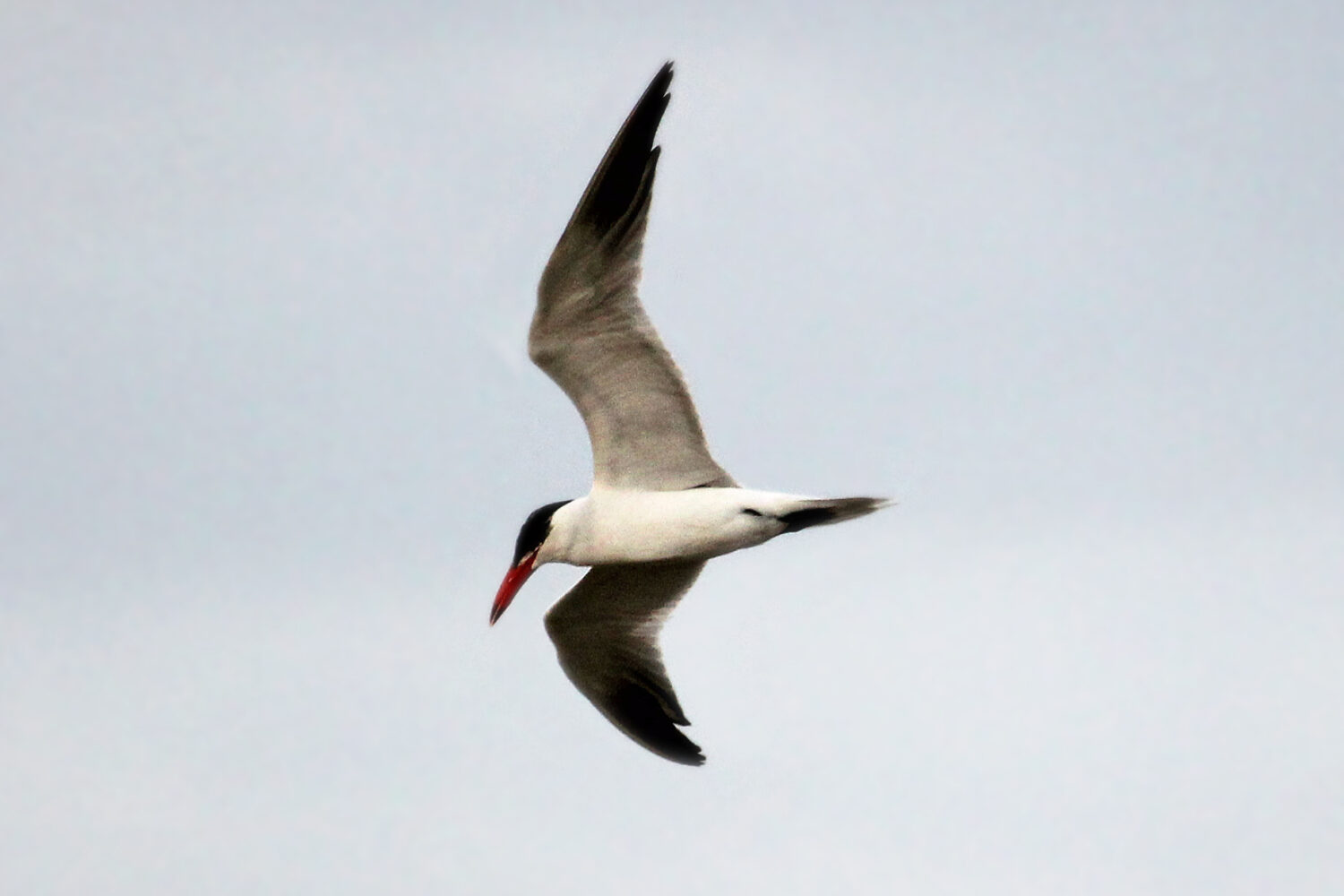
Mida Creek is 6-kilometer long expanding inland from the sea, adjacent to the renowned birding forest of Arabuko Sokoke . Mida Creek is a tidal inlet that extends across an area of 32-kilometer square. The creek consists of different types of tide-influenced habitats, such as mud and sand flats, open shallow waters, and mangrove forests. Extensive sand flats are exposed at low tide, providing feeding grounds for thousands of passage and migrant waders. The twice-daily tides and freshwater from underground seepage provide food and habitat for fish, shrimps , crustaceans , mollusks , and turtles. Mida Creek is a recognized International Bird Area and Arabuko-Sokoke Forest forms a UNESCO Biosphere Reserve. It is not only a paradise for national waterfowl but also for migrating birds from Europe and Eurasia to find a place to rest during their journey or they choose to stay at Mida Creek to over-winter. Mida Creek is an important passage and wintering area for Palearctic migrant waders. The populations of Greater and Lesser Sandplover and Crab Plovers at Mida Creek are internationally important. Mida Creek is a significant feeding area for Dimorphic Egrets, Lesser Crested , and Roseate Terns . Common migrant shorebirds include; Sanderling , Curlew Sandpiper , Little Stint, Whimbrel , Grey Plover , and Greater and Lesser Sandplover . In the landward area around the creek, a further 115 species have been recorded. Comparably varied in numbers and distribution is the aquatic flora of Mida Creek. Eleven seagrass and thirty-three seaweed species are found here alongside nine species of mangrove. Both seagrasses and mangroves serve to trap sediments-benefiting local coral reefs and providing important habitat for many marine species. The Creek is also an important feeding and development area for juvenile Green and Hawksbill Sea Turtles . Coral heads and the rich seagrass beds provide food in a sheltered area away from large predators. The open areas of the Mida Creek and its mangrove channels are important feeding and breeding grounds for many species of fish species including Jacks , Snappers, Groupers, Rabbit Fish, Parrotfish, Emperors, and Barracuda
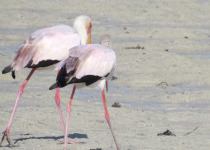
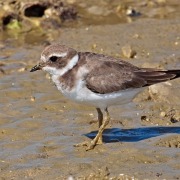
Mida Creek notable Birds; Crab Plover, Greater Sandplover, Lesser Sandplover, Curlew Sandpiper, Whimbrel, Dimorphic Egret, Grey Plover, Lesser-crested Tern, Sanderling, Roseate Tern, Common Ringed Plover, White-fronted Plover, Bar-tailed Godwit, Ruddy Turnstone, Black-bellied Plover, Saunders’s Tern, African Woolly-necked Stork, Pale Batis, Palm-nut Vulture, Zanzibar Boubou, African Golden Oriole, Ethiopian Swallow, Purple-banded Sunbird, Sooty Gull, Coastal Cisticola, Scaly Babbler, African Openbill, Brown-hooded Kingfisher, Eastern Black-headed Batis, Northern Brownbul, Red-capped Robin-Chat, Little Sparrowhawk, Senegal Lapwing, Fiery-necked Nightjar, Bearded Scrub-Robin
Birds you can spot
Itinerary ▼
Mida Creek is an excellent birding haven, an inescapable oasis on Kenya’s coast for witnessing exciting shorebirds both migrants and residents. The beautiful birding creek circled by thickets of mangrove forest and padded with palms is a paradise for migratory waders searching for food and wintering areas. Extending inland from the sea into Arabuko Sokoke Forest is one true hidden birdwatching treasure: Mida Creek is an extensive intertidal inlet surrounded by mangrove forest. This is an important area for passage and wintering waders, as well as being a favorite spot of several interesting herons, warblers, storks, egrets, and raptors Mida Creek is 6-kilometer long expanding inland from the sea, adjacent to the renowned birding forest of Arabuko Sokoke . Mida Creek is a tidal inlet that extends across an area of 32-kilometer square. The creek consists of different types of tide-influenced habitats, such as mud and sand flats, open shallow waters, and mangrove forests. Extensive sand flats are exposed at low tide, providing feeding grounds for thousands of passage and migrant waders. The twice-daily tides and freshwater from underground seepage provide food and habitat for fish, shrimps , crustaceans , mollusks , and turtles. Mida Creek is a recognized International Bird Area and Arabuko-Sokoke Forest forms a UNESCO Biosphere Reserve. It is not only a paradise for national waterfowl but also for migrating birds from Europe and Eurasia to find a place to rest during their journey or they choose to stay at Mida Creek to over-winter. Mida Creek is an important passage and wintering area for Palearctic migrant waders. The populations of Greater and Lesser Sandplover and Crab Plovers at Mida Creek are internationally important. Mida Creek is a significant feeding area for Dimorphic Egrets, Lesser Crested , and Roseate Terns . Common migrant shorebirds include; Sanderling , Curlew Sandpiper , Little Stint, Whimbrel , Grey Plover , and Greater and Lesser Sandplover . In the landward area around the creek, a further 115 species have been recorded. Comparably varied in numbers and distribution is the aquatic flora of Mida Creek. Eleven seagrass and thirty-three seaweed s
Locations & map
- Mida Creek - Kenya (Primary map point for this public tour page; exact route is confirmed with the partner.)
Transport & stays
- Tour vehicle / transfers as quoted Vehicle, pickup and transfer arrangements must be confirmed for the selected itinerary. | Meet: Nairobi or agreed point | Pickup: On request
Policies & FAQ
Are dates and prices fixed?
Unless a current departure is confirmed in writing, dates, group size and price are provided on request by ConQuest Adventures through BirdWatch.
Are target birds guaranteed?
No. The itinerary focuses on suitable habitats and target species, but sightings depend on season and field conditions.