
South Africa Birding & Wildlife Safari
Join us on our South Africa Birding Tour and Wildlife Safari! The southernmost country on the African continent is a nature-lover's paradise, where you can experience spectacular landscapes and an incredible range of wildlife.















About this tour
South Africa is a land of astounding diversity—not only in culture but in its extraordinary natural heritage. South Africa is a true haven for bird enthusiasts, as the country hosts around 840 bird species and boasts an impressive 69 endemic and near-endemic bird species. Its array of distinctly different ecosystems allows birders to explore an exceptional variety of bird-rich habitats, from highland grasslands and sub-tropical wetlands to savannas and fynbos-covered mountains. It’s also the exclusive stronghold for two remarkable bird families, the Rockjumpers and the Sugarbirds, found only here and in the tiny neighbouring nations of Lesotho and eSwatini.
Our birding tour will begin in Johannesburg and venture to the high-altitude grasslands of Dullstroom, home to localized species like the Yellow-breasted Pipit (Endemic) and Gurney’s Sugarbird (Near Endemic). In the nearby Blyde River Canyon, dramatic cliffs and escarpment forests provide habitat for raptors such as Cape Vulture, as well as a host of forest species.
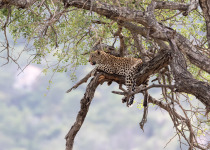
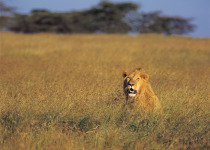
Next, the iconic Kruger National Park, where birders can enjoy a mix of savanna and riverine species—rollers, storks, hornbills, eagles—and the bonus of world-renowned mammal viewing, including the Big Five (lions, leopards, rhinos, elephants, and buffalos).
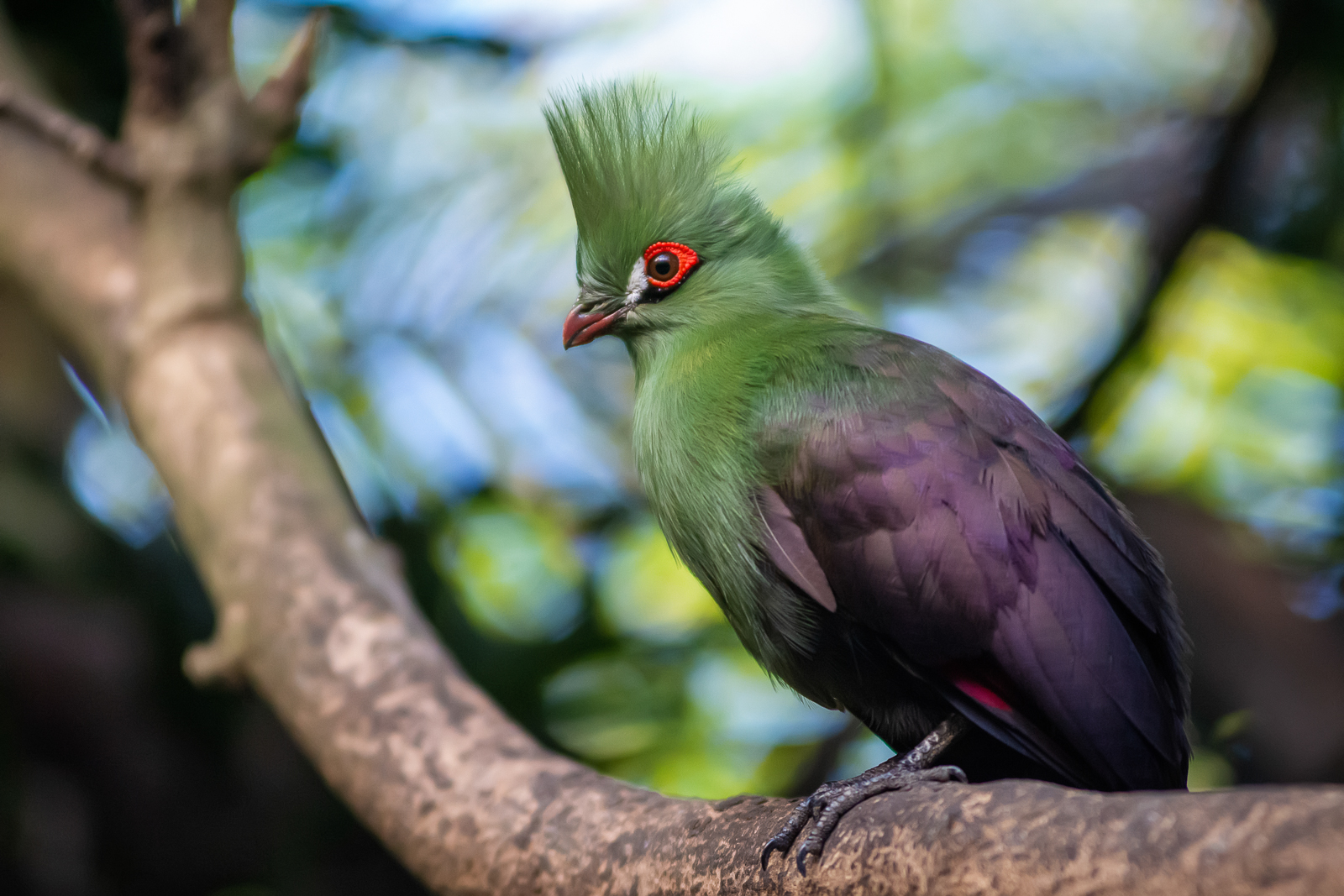
In the grasslands and wetlands of Wakkerstroom, endemics like Yellow-breasted Pipit (Endemic) are key targets. From here, the route follows the sub-tropical coastline to iSimangaliso Wetland Park and St Lucia, where forest, estuary, and wetland habitats support species such as Green Malkoha, and Livingstone’s Turaco. Eshowe adds further forest specials, including the Spotted Ground Thrush, Lemon Dove, and Eastern Bronze-naped Pigeon. The cool, misty forests and rolling grasslands of Karkloof in the KwaZulu-Natal Midlands offer sightings of threatened species like Wattled and Grey-crowned Crane.
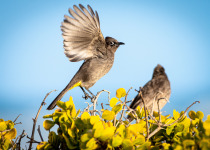
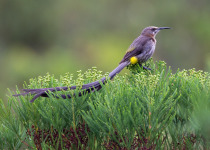
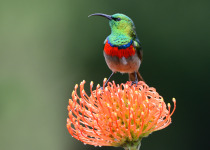
Finally, the tour heads to the Western Cape, a truly remarkable region defined by rugged mountain ranges, strong summer winds, and a winter rainfall regime that has shaped the Cape Floral Kingdom—home to the unique vegetation known as Fynbos. This singular habitat hosts a wealth of range-restricted and endemic birds like, Orange-breasted Sunbird and Cape Sugarbird making the Western Cape a must-visit for endemics-seekers. The region also delivers unforgettable scenery, a rich cultural tapestry, friendly locals, and excellent travel infrastructure. The tour culminates with a pelagic trip from Cape Town, where birders venture into the cold, nutrient-rich waters of the Atlantic in search of albatrosses, petrels, and shearwaters—an exhilarating finale to our South African birding tour.
Organizer

Itinerary ▼
Our South Africa birding tour begins in Johannesburg. After settling into our hotel, the group will gather for a welcome dinner—an ideal opportunity to get to know your fellow travellers, discuss the journey ahead, and preview the exceptional birding experiences to come.
Overnight Johannesburg (Afrika Sky Boutique Hotel or similar)
We begin with a half day drive through Highveld grassland biome heading towards Polokwane Game Reserve just outside the town of Polokwane. This 3,200 hectare gem of a reserve is characterized by open savannah with scattered Acacia and broadleaved trees. Granite outcrops and riverine thickets add to the habitat diversity, and there are also open areas of grassland that are critical to a number of lark, pipit and cisticola species. Our main targets here are Short-clawed Lark and Northern Black Korhaan, along with the small possibility of seeing Double-banded Courser, Barred Wren-Warbler and Tinkling Cisticola.
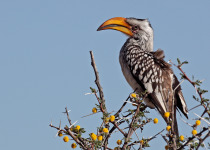
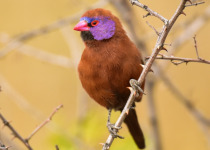
A short drive in the reserve and a walk at one of the picnic sites should yield some nice birds to begin our trip list with. This could include Burnt-necked Eremomela, Black-faced, Violet-eared and Blue Waxbill, Crimson-breasted Shrike, Southern Black and Marico Flycatcher, Magpie Shrike, Black-throated Canary, Black-chested Prinia, Sabota Lark, Southern Yellow-billed Hornbill, Cape Starling, Brubru, Black-collared, Acacia Pied and Crested Barbet, Marico Sunbird, Swainson’s Spurfowl, Crowned Lapwing, Ring-necked Dove, Groundscraper Thrush, Common Hoopoe, Brown-hooded Kingfisher, Fork-tailed Drongo, Southern Boubou and Golden-tailed Woodpecker to new a few. From a mammal point of view the reserve is well stocked, and we should see Plains Zebra, Greater Kudu, Blue Wildebeest, Hartebeest (caama subspecies), Tsessebe (lunatus subspecies) and Southern Giraffe.
After this exciting start to the trip we turn east towards the mountains and their indigenous forests. We continue to our destination in beautiful Magoebaskloof, where we spend the next 2 nights. Our lodge is perfectly situated in the middle of the stunning forest, allowing us to start birding as soon as we step out of the door!
Overnight: Magoebaskloof (Bramasole)
We have a full day in Magoebaskloof and surrounds and want to make the most of it! This is undoubtedly the best forest birding spot in the entire Limpopo/Mpumalanga area, if not the country.
We will probably have a packed breakfast, but will enjoy lunch at a nice roadside café.
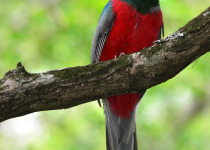
During our drives and walks in the beautiful indigenous montane forests we will look for some very special species. These include Cape Parrot, Bat Hawk, Square-tailed Drongo, Black-fronted and Olive Bushshrike, Narina Trogon, Blue-mantled Crested Flycatcher, Yellow-throated Woodland Warbler, Knysna Turaco, Grey Cuckooshrike, White-starred Robin, Brown Scrub Robin, Orange Ground Thrush, Scaly-throated Honeyguide, Cape Batis, Barratt’s Warbler, Yellow-streaked Greenbul, Olive Woodpecker, African Emerald Cuckoo, Rufous-chested Sparrowhawk, African Goshawk, African Cuckoo-Hawk, Crowned Eagle and many more.
We will also try to fit in a short stop at the very photogenic Debengeni Falls, where we could see Mountain Wagtail.
Overnight: Magoebaskloof (Bramasole)
Our morning will start with an early breakfast and some more birding in the forests, looking for species we may have missed the previous day or looking for other special ones.
We will slowly head southeast, dropping down from the highveld via some beautiful mountain passes, going through the tropical garden town of Tzaneen and the eco-tourism hotspot town of Hoedspruit. We will make some short birding stops along the way and enjoy lunch en route.
We will then turn east, entering the world famous Kruger National Park at the Orpen Gate. Once we enter the park our focus, while still on birds, will also divert a bit to the possibility of sightings of any of Africa’s famed Big 5 (Lion, African Savanna Elephant, Leopard, African Buffalo and rhinoceros), along with Cheetah, African Wild Dog and any of the almost 150 species of mammal that have been recorded in this fantastic park. We will make our way to our first overnight stop, Satara rest camp, exploring some of the smaller dirt roads and thereby keeping off the main tar roads, for the best birding experience.
The 20,000 km2 Kruger National Park is without doubt the best birding destination in southern Africa. It is a mosaic of lowland savannas and woodlands, bisected by wooded, seasonally flowing rivers, with dams and pans dotted throughout. The park varies in altitude between 200 metres (660 ft) in the east and 840 metres (2,760 ft) in the southwest. This wide range of habitats leads to an incredible wealth of birds, with more than 520 species having been recorded in the park over the years.
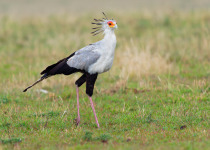
Of special interest here is some of the larger terrestrial birds as well as birds of prey that are difficult or near impossible to find reliably outside protected areas such as Kruger. These include Kori Bustard, Southern Ground Hornbill, Martial and Tawny Eagle, Bateleur, Lappet-faced Vulture, Secretarybird and Saddle-billed Stork.
Other typical bushveld birds that we will encounter are Southern Yellow-billed and Southern Red-billed Hornbill, Southern White-crowned Shrike, Red-billed and Yellow-billed Oxpecker, Brown-headed Parrot, Purple-crested Turaco, Crested Francolin, Swainson’s Spurfowl, White-crowned Lapwing, Grey-headed Bushshrike and Mourning Collared Dove, to name just a few.
We will reach our rest camp, Satara, in the late afternoon and freshen up. Satara, although fairly large, has a rustic charm, with the bulk of the accommodation set out in a series of circles. Satara, like most of Kruger’s camps, has been artificially well wooded, and it is always worth exploring on foot. A walk inside the fence perimeter might produce Honey Badger, African Scops Owl and Red-billed Buffalo Weaver.
Overnight: Satara Rest Camp, KNP
Today we have our first full day of birding and game viewing in Kruger. We will enjoy a packed breakfast and stop at one of the picnic spots or rest camps for lunch.
While in the area around Satara in the morning we will look for species like Common Ostrich, Kori Bustard, Southern Ground Hornbill, Secretarybird, Sabota Lark, Chestnut-backed Sparrow-Lark, Lesser Grey Shrike, Montagu’s and Pallid Harrier, Red-billed Quelea, Burchell’s Starling, Bennett’s Woodpecker and many more.
Travelling to the southern part of the park we will concentrate on slightly different habitats. We will focus on areas of open grassland, waterholes and broad-leaved woodland hosting species such as African Cuckoo-Hawk, Dark Chanting Goshawk, Green-capped Eremomela, Bennett’s Woodpecker and even Bushveld Pipit. The damp depressions around streams sometimes yield Black Coucal and in season after good rainfall, the odd Corn Crake.
This area is particularly good for the elusive Black Rhinoceros and Lichtenstein’s subspecies of Hartebeest, along with all the usual fantastic and numerous Kruger mammals.
We will reach our camp for the nest two nights, Skukuza, in the late afternoon and if time permits, it is always a good idea to walk around the camp grounds in search of some special fauna and flora species.
Skukuza is the park’s headquarters and its largest camp, and the camp grounds are well foliaged, with some lofty trees along the Sabie river’s edge. Facilities are diverse, as are the animals and plants found both within the camp and in the surrounding areas. The camp is a great place to spot the dove-sized Wahlberg’s Epauletted Fruit Bat and the very cute Thick-tailed Greater Galago. Birds like Crowned Hornbill, Grey-headed Bushshrike and African Green Pigeon are regularly seen in the camp.
We will do our lists and enjoy dinner at the restaurant overlooking the river and enjoy a good night’s rest, falling asleep to the sounds of the African bush. Overnight: Skukuza Rest Camp
We will have a full day to explore the southern part of Kruger. The habitat around Skukuza comprises riparian zones, with large trees lining the riverbanks, and thickets away from the river courses. The permanent water sources here attract large numbers of Impala, one of the main prey items of Leopard, so be on the lookout for these and other predators such as Lion, African Wild Dog and Spotted Hyena. The riverbanks also play host to huge numbers of bird species, and some uncommon ones like Crowned Eagle, African Finfoot and Pel’s Fishing Owl have been seen here.
Other birds we will look for in this area of the park include Terrestrial Brownbul, Bearded Scrub Robin, Bleating Camaroptera, Kurrichane Thrush, Grey Tit-Flycatcher, Black-headed Oriole, Brubru, Retz’s Helmetshrike, Marico, Collared and White-bellied Sunbird, Yellow-breasted Apalis, Southern Black Tit, Pied and Giant Kingfisher, Red-billed and African Firefinch, Tawny-flanked Prinia, Cardinal and Bearded Woodpecker, Coqui Francolin, Brown-crowned and Black-crowned Tchagra, Burnt-necked and Yellow-bellied Eremomela and many others.
We will return to Skukuza late in the afternoon to relax. After dinner, we will take a night drive with one of Kruger’s knowledgeable rangers in a safari vehicle. We will be on the lookout for nocturnal mammals such as African Civet, genets, Side-striped Jackal, the beautiful Serval, White-tailed Mongoose and even Afro-Asiatic Wildcat, along with several species of owl and nightjar. These include Spotted and Verreaux’s Eagle-Owl, African Scops Owl, Southern White-faced Owl, and Square-tailed and Fiery-necked Nightjar. Overnight: Skukuza Rest Camp
Today after breakfast we make our way even further south to another camp of Kruger that we love, namely Berg-en-Dal.
Some of the species we will search for during our drive today include Grey Penduline Tit, Yellow-fronted Tinkerbird, Groundscraper Thrush, Red-headed Weaver, Mocking Cliff Chat, Croaking and Lazy Cisticola, Lizard Buzzard, Bushveld Pipit, Flappet Lark, Pallid Flycatcher, Striped Kingfisher, Yellow-throated Bush Sparrow and many more.
The scenery in the area closer to Berg-en-Dal is characterised by beautiful rocky outcrops and small hills, so it’s a hotspot for Leopard! It also makes for some fantastic photographic opportunities. The area hosts high numbers of White Rhinoceros, Greater Kudu, Impala, Southern Giraffe, some African Savanna Elephant, Southern Reedbuck, Klipspringer, Rhebok and Common Warthog. Large packs of African Wild Dog are also regularly seen in the region.
Upon arrival at Berg-en-Dal, we will have some time to explore the camp itself. Berg-en-Dal, meaning ‘mountain and dale’, is aptly named for its superb location on the bank of the Matjulu spruit in the far southwest of the park. It is one of the new generation of camps and was opened in 1984.
We will gather for sundowner drinks, update our lists and then enjoy dinner, and afterwards retire to our bungalows for our last night in magical Kruger. Overnight: Berg and Dal Rest Camp
We will travel to Wakkerstroom, a drive of about 5 hours to the south. We will travel through some beautiful areas of the country and will have lunch en route.
The quaint village of Wakkerstroom is situated on the Highveld plateau, dominated by rolling hills and upland grassland, in stark contrast to the habitats we’ve visited thus far. A total of 13 bird species are endemic (or nearly so) to South Africa's grassland biome and another 33 southern African endemics or near-endemics occur here, making it easy to see why the area is a magnet for foreign as well as South African birders.
We should arrive in time for some afternoon birding.
We will visit the wetland marsh on the outskirts of town. Here we have a good chance of finding skulkers like Little Rush Warbler, African Rail and who knows, maybe even a Red-chested Flufftail if we are very lucky. African Swamphen, Purple Heron, Cape Shoveler and Cape Weaver are some of the commoner species roosting here in the late afternoons.
We will also look for Pale-crowned Cisticola, Black-crowned Night Heron, Little Bittern, African Snipe, Little Grebe, Maccoa Duck, Southern Pochard, Purple Heron and Yellow-billed Egret. Remember to also look up if you want to see South African Cliff, White-throated and Greater Striped Swallow, and Little and White-rumped Swift.
We will check in to our accommodation for the next 2 nights, and have dinner at our guesthouse in Wakkerstroom. (Forellenhof Guest House)
We will have an early start in search of Wakkerstroom’s two very special, extremely rare, endemic larks, namely Rudd’s and Botha’s Lark, both listed as Endangered by the IUCN. In our search for these two denizens of the grasslands, we’ll also be on the lookout for their more common cousins, Eastern Clapper, Eastern Long-billed, Pink-billed and Red-capped Larks.
The area surrounding the town is mountainous with kloofs, mountain springs, vlei areas, dams, conservation and heritage sites. Due to the occurrence of high priority wetlands and the proximity to the sources of three rivers, the Vaal, Tugela and Pongola, it was declared a National Freshwater Ecosystem Priority Area.
Wakkerstroom isn’t just about larks though; endemics like Yellow-breasted Pipit, Blue Korhaan and Cape Canary will add a subtle touch of colour. In the village, the striking Bokmakierie is usually an easy find alongside the peculiar Red-throated Wryneck.
After lunch in town we’ll also visit a local site in search of White-bellied and Denham’s Bustard. At another spot, we’ll look for the enigmatic African Rock Pipit and Buff-streaked Chat.
Some of the other birds that we might encounter include Southern Bald Ibis, Jackal Buzzard, Pied Starling, Cape Crow, Sentinel Rock Thrush, Buff-streaked Chat, Mountain Wheatear, Bush Blackcap, Drakensberg Prinia, Amur Falcon, Lesser Kestrel, Ground Woodpecker, Grey Crowned and Blue Crane, Grey-winged and Red-winged Francolin, and the ‘often-heard-but-rarely-seen’ Quailfinch. Also, all 5 of the South African species of harrier visit Wakkerstroom at certain times of the year, so we’ll keep an eye out for those too.
Overnight Wakkerstroom (Forellenhof Guest House)
We will do some early morning birding looking for any birds we might have missed the previous day.
Our journey will then continue southeast, to one of the KwaZulu-Natal province’s premier birding spots, Mkuze Game Reserve, sometimes confusingly spelled uMkhuze. We should arrive in the Mkuze area mid to late afternoon and we will waste no time finding some of the spectacular birds that call this remarkable area home. Mkuze is a 40,000 hectare (150 sq mi) game reserve that was proclaimed a protected area in 1912. The reserve has a wide diversity of natural habitats which include acacia savannah, mixed woodland, sand forest, riverine forest, rivers and pans, grassland, cliffs and rocky ridges.
We will drive to the sand forest if we can; this dry and localized type of forest is home to several spectacular species, included Pink-throated Twinspot, Gorgeous Bushshrike, Neergaard’s Sunbird, African Barred Owlet, Yellow-bellied Greenbul, Crested Guineafowl and Rudd’s Apalis.
In terms of other wildlife, Mkuze is also home to several fantastic mammal species, including African Savanna Elephant, African Buffalo, Black and White Rhinoceros, Lion, Leopard, African Wild Dog, Cheetah, Hippopotamus and several special antelope species.
Once we have seen some nice birds and a few big game species, we will head to our accommodation just outside the park. Overnight: Near Mkuze (Ghost Mountain Inn)
We will enjoy an early breakfast at our lodge before returning to Mkuze. We have a full day ahead to explore the incredible diversity of Mkuze, not just birds but also a whole host of fascinating mammals, from one of Africa’s smallest antelope, the Suni, to the largest land mammal on the planet, the African Savanna Elephant.
Birding wise Mkuze is undoubtedly one of the top birding spots in South Africa, with a list of way over 450 species, and an unpredictability that makes birders return here time after time. It boasts several special and range-restricted species and we’ll keep an eye out for Southern Banded Snake Eagle, Sooty Falcon, Pel's Fishing-Owl, Green Malkoha, Scaly-throated Honeyguide, Broad-billed Roller, African Broadbill, Eastern Nicator, Olive-tree Warbler, Black-bellied Bustard, Senegal Lapwing, several vulture species, Martial Eagle, White-crested Helmetshrike and Grey Penduline Tit.
We will have a packed lunch today and enjoy it somewhere in the park where there is a nice view of one of the dams or surrounding hills.
At one of the large wetlands, we will look for species such as Pink-backed and Great White Pelican, African Openbill, Yellow-billed and African Woolly-necked Stork, African Pygmy Goose, Lesser Jacana, Dwarf Bittern, Goliath Heron, Water Thick-knee, Lesser Masked and Thick-billed Weaver, African Wattled Lapwing and Whiskered Tern. Several good hides are situated in the park, mostly overlooking waterholes and these can be worth a visit, sometimes producing memorable moments. Just don’t wander too close to the water’s edge, as there are some monstrously huge Nile Crocodiles here! Overnight: Near Mkuze (Ghost Mountain Inn)
Birding in the gardens of our lodge outside Mkuze can be top-notch and we will spend the early morning here. We often find birds such as Red-fronted Tinkerbird, Bearded Scrub Robin, Green Twinspot, Eastern Nicator and Purple-crested Turaco in the gardens.
We will leave Mkuze and head to another top destination, the renowned coastal town of St Lucia, a popular holiday destination nestled within the iSimangaliso Wetland Park World Heritage Site. Our time here is devoted to exploring the eastern shores section of the park, a spectacular landscape where coastal forests, grasslands, freshwater pans and pristine beaches converge. This diverse environment provides excellent opportunities for both birding and general wildlife viewing.
Covering 3,280 km², iSimangaliso Wetland Park was established to protect the ecologically vital Lake St Lucia, South Africa’s most important waterbird breeding site. Recognised as the country’s first UNESCO World Heritage Site in 1999 and designated a Ramsar Wetland of Importance, the park encompasses a network of reserves and conservation areas that safeguard a rich diversity of unique flora and fauna. Formerly known as the Greater St. Lucia Wetland Park, it was renamed in 2007 to iSimangaliso, meaning “a miracle” or “something wondrous” in the local Zulu language.
A visit to the St Lucia estuary mouth offers a unique opportunity to explore one of the region’s prime shorebird habitats. Several tern species are often present, including Caspian, Swift, Sandwich, Common and Little Tern, frequently seen diving, and roosting along the shoreline. The area also attracts large waterbirds such as Great White and Pink-backed Pelican, Yellow-billed and African Woolly-necked Stork, and Lesser Flamingo feeding in the shallows. Among the waders, species like Ruff, Ruddy Turnstone, Greater Crested, Common and Caspian Tern, Common, Wood and Curlew Sandpiper, Sanderling, Little Stint, Pied Avocet, Chestnut-banded, Grey and White-fronted Plover, and the striking African Oystercatcher may also be encountered.
Other notable species we will look for today include Trumpeter and Crowned Hornbill, Southern Crested Guineafowl, Livingstone’s Turaco, Gorgeous Bushshrike, Blue-mantled Crested Flycatcher, Purple-banded Sunbird, Red-capped Robin-Chat, Brown Scrub-Robin and Rudd's Apalis. Among the more elusive but sought-after species are Southern Brown-throated Weaver, Yellow-bellied Greenbul and Green Twinspot. Grassland and edge habitats may reveal Blue-cheeked Bee-eater, European Honey Buzzard, Orange-breasted Waxbill, Grey Sunbird, Black-bellied Starling, Cuckoo Finch and Red-backed Mannikin. Overnight St Lucia (St Lucia Kingfisher Lodge).
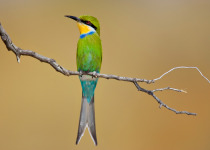
We’ll head out after breakfast and make our way south to the town of Eshowe. This drive of about 2 to 3 hours will see us pass close to many of Kwazulu-Natal’s private game reserves and national parks. En route we will stop at several wetlands near the town of Mtubatuba where we might add the likes of Long-crested Eagle, Blue-cheeked and White-fronted Bee-eater, Yellow-rumped Tinkerbird, Red-faced and Rufous-winged Cisticola, Red-breasted Swallow, Spectacled Weaver, Lesser Honeyguide, Red-headed Quelea and more.
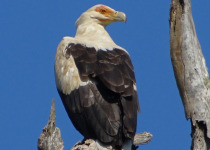
Before arriving in Eshowe we will drive into the small seaside town of Mtunzini (the name is a word in the Zulu language meaning “place in the shade”), heading for the Umlalazi Nature Reserve, where we will walk one of the trails. The reserve protects a rich mosaic of estuarine habitats, coastal dune forest, mangroves and salt marshes. This 1,028-hectare reserve is a haven for birdlife, offering a mix of forest, wetland and shoreline species. It is one of the few places where the rare Palm-nut Vulture can be reliably seen, often near raffia palms. Umlalazi also supports special species such as Osprey, Southern Banded Snake Eagle, Trumpeter Hornbill, Mangrove and Half-collared Kingfisher, Tambourine Dove, Bearded Scrub Robin, Collared and Neergard’s Sunbird, Black-throated Wattle-eye and African Finfoot. Also look out for White-eared Barbet along the roads in town.
We’ll then make the short drive to Eshowe and check into our accommodation. Eshowe is the oldest town of European settlement in the Kwazulu-Natal province. Eshowe's name is said to be inspired by the sound of wind blowing through the nearby indigenous Dlinza Forest, the most important and striking feature of the town. However, the name is most likely to be derived from the Zulu word for the Wavyleaf Cartwheel shrubs, showe or shongwe, that are abundant in the town. Today Eshowe is a market town, with two shopping centres, a main bus station serving the hinterland, a major hospital and several schools.
After lunch we will head to Amatikulu Nature Reserve about 30 kilometres (18 miles) down the Indian Ocean coastline. Despite its small size (2,100 hectares), the reserve contains many different habitats, including coastal, riparian and dune forest, grassland, lala palm bushveld, an estuary and a freshwater pan. This variety has resulted in a checklist of over 300 birds, and some of the special species we’ll look for here on a walk and drive include Swamp Nightjar, Black Coucal, White-fronted Bee-eater, Fan-tailed Grassbird, Olive Woodpecker, Lemon Dove, Black-throated Wattle-eye, Grey Waxbill, Yellow-throated Longclaw, Croaking Cisticola, Ashy Flycatcher and Brown-backed Honeybird amongst many others.
We will return to our accommodation in the early evening. Overnight Eshowe (Birds of Paradise).
Today we have a big day! We will visit two very famous forests in search of some very special species. After an early breakfast, our first stop today will be at Ongoye forest, a remnant patch of coastal scarp forest which straddles the hills for about 20km between the towns of Eshowe and Empangeni.
Ongoye is home to some rare and endemic species of fauna and flora, including the Ongoye Dwarf Cycad (Encephalartos ngoyanus), Ongoye centipede, an endemic subspecies of the Red Bush Squirrel and two undescribed endemic dwarf chameleons. The forest is picture-perfect beautiful, occurring in patches between granite outcrops and rolling grasslands.
Ongoye is an important breeding area for the Eastern Bronze-naped Pigeon and home to the endangered Spotted Ground Thrush. At least 165 species of birds have been identified in the forest, and this is the only spot in southern Africa where the Green Barbet can safely be found, and usually in good numbers! Apart from looking for those specials, we will also try to tick Green Twinspot, Narina Trogon, Brown Scrub Robin, Chorister Robin-Chat, Grey Cuckooshrike, Yellow-streaked Greenbul, Crowned Eagle, Crowned and Trumpeter Hornbill, African Emerald Cuckoo, Striped Pipit and many others as we walk along the beautiful trails.
After leaving Ongoye we will enjoy lunch back in Eshowe before heading out of town to a good stakeout for Southern Tchagra, another endemic for our trip! We’ll also enjoy more forest birding this afternoon at nearby Dlinza Forest Nature Reserve. This beautiful piece of forest covers an area of 250ha and is one of southern Africa's prime forest birding spots and consists almost entirely of climax coastal scarp forest. There are several walking trails we will follow, as well as a 125 metre (410 ft) long and 25 metre (82 ft) high, sturdy canopy walkway that provides an entirely different viewpoint on the forest and its inhabitants.
Here at Dlinza we will look for Spotted Ground Thrush, Eastern Bronze-naped Pigeon, Green Malkoha, Olive Woodpecker, Green Twinspot, Red-backed Mannikin, African Firefinch, Crowned Eagle, Narina Trogon, Trumpeter and Crowned Hornbill, Olive and Collared Sunbird, Dark-backed Weaver, Chorister Robin-Chat, Terrestrial Brownbul, Lemon Dove and many others.
The forest is also home to several duiker species, Southern Bushbuck, Vervet Monkey, Bushpig, beautiful butterflies (Citrus Swallowtail, Dusky-veined Acraea and more), as well as some very impressive trees.
Overnight Eshowe (Birds of Paradise).
We will enjoy a quick coffee and head to our next destination, the Sani Pass. It is a beautiful drive of between 5 and 6 hours and we will make regular stops along the way to stretch our legs, and lunch will also be enjoyed en route.
If there is enough time we will stop at the Marutswa Forest on the outskirts of town. It is a beautiful patch of mistbelt forest that boasts several fantastic species, as well as a significant number of large, old yellowwood trees. A walk on the trails and the raised boardwalk could yield Orange Ground Thrush, Narina Trogon, Cape Parrot, African Crowned Eagle, Knysna Turaco, Crowned Hornbill, Dark-backed Weaver, Bush Blackcap, Barratt's Warbler and many others.
We will reach our accommodation in the late afternoon and relax after a long day sitting in the car. If time allows, the lush garden and small lake on the property offer an excellent opportunity for some relaxed birding as the day begins to wind down. We could see species like Grey Crowned Crane, Purple Heron, White-backed Duck, Southern Bald Ibis, Pied Kingfisher, Bokmakierie, Little Rush Warbler, Pin-tailed Whydah, Common Waxbill, Levaillant’s Cisticola and many others.
Overnight near Himeville (Moorcroft Manor)
We head out early this morning to explore this stunning area.
Today is dedicated to exploring the iconic Sani Pass. This iconic gravel mountain pass, with its summit at 2,876 metres (9,436 ft) above sea level, not only out distances and out climbs all other passes in the subregion, it also boasts some fantastic birds along its spectacular altitudinal gradient.
Situated between the Kwazulu-Natal province of South Africa and the neighbouring country of Lesotho, the dramatically beautiful pass was built in the early 1950s. Due to the possibility of extreme weather changes between the bottom and top of the pass (an altitude difference of more than 1,300 metres!), only 4x4 vehicles are allowed, even on days when the weather might seem perfect to the untrained eye.
The pass is undoubtedly one of South Africa’s most celebrated birding routes. This rugged ascent offers access to the Drakensberg Escarpment and highland habitats, where many of the region’s endemic species can be found amid breathtaking mountain scenery.
Our journey begins in the grasslands at the base of the pass, where the surface of the road is till tar. We will look for species such as Secretarybird, Denham’s Bustard, Common Buzzard, Southern Boubou and Ant-eating Chat. Lower elevations also support small patches of forest and scrub, which host species including Drakensberg Prinia, Bush Blackcap, Chorister Robin-Chat, Brown-backed Honeybird and Swee Waxbill.
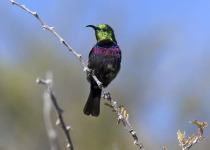
As the road winds upward, the vegetation transitions into beautiful Protea-dominated slopes. These areas provide excellent chances of seeing Malachite Sunbird, Gurney’s Sugarbird, Ground Woodpecker, Cape Rock Thrush, Buff-streaked Chat and Red-throated Wryneck. At small wetlands and surrounding grasslands along the way we could tick Fan-tailed Grassbird, Yellow Bishop, Long-billed Pipit, Red-winged Francolin, African Yellow Warbler, Cape Grassbird and Wailing Cisticola.
The road surface changes from tar to gravel at the South African border post (where we will have our passports stamped and stretch our legs). In this general area we will look for Barratt’s Warbler, Greater Double-collared Sunbird, Karoo Prinia and many others.
We then head up the pass proper. The next 8 kilometres are truly spectacular, with the final 2 kilometres resembling an Alpine road, complete with sheer drops and hairpins. Here we will look for species such as Bearded and Cape Vulture, Jackal Buzzard, Lanner Falcon, Drakensberg Rockjumper and Drakensberg Siskin.
At the summit of the pass, the road crosses into Lesotho, where we will once again have our passports stamped, this time at the Lesotho border post. A short drive into the “mountain kingdom” could yield Mountain Pipit, Red-capped Lark, Sentinel Rock Thrush, Sickle-winged Chat, Cape Bunting and many others.
Before heading down the pass we will stop at “the highest pub in Southern Africa” for a local beer and some photos. Then we head down again, birding as we go, making sure to tick all the species this special place has to offer.
Overnight near Himeville (Moorcroft Manor)
This morning we start with a scenic drive of ~3-4 hours to the King Shaka International Airport just north of the city of Durban. From there we will catch a domestic flight (about 2 hours long) to Cape Town International Airport, marking the final leg of the trip.
The Western Cape province, located in southern South Africa, is bordered by the Atlantic Ocean to the south and west, with folded mountain ranges inland. Its unique climate, shaped by winter rains, summer winds and diverse topography, has fostered a high degree of endemism, resulting in the famous Fynbos floral kingdom. In 2004, the "Cape Floral Region Protected Areas" were inscribed as a UNESCO World Heritage Site.
Cape Town, South Africa's second-largest city and legislative capital, is known for its stunning beauty and charm. Nestled beneath the iconic Table Mountain (one of the New7Wonders of Nature), it is a port city with a rich cultural heritage. “The Mother City” has been named the best city in the world, and world's best city for travellers, numerous times, including by The New York Times in 2014, Time Out in 2025, and The Telegraph for the past 8 years (2017 through 2025).
Upon arrival at the Cape Town International Airport, we will transfer to our boutique hotel for the next four nights, located in a beautifully verdant suburb on the lower slopes of the mountains.
If time allows, we will visit Kirstenbosch National Botanical Garden, situated very close to our accommodation. The lush gardens cover 528 hectares (1,300 acres) and were officially created in 1913, but its history can be traced back to 1660! The focus of the gardens is indigenous plant cultivation, and specifically the protection of plants native to the Cape region. This is highlighted by a superb collection of proteas.
We will walk along the many roads and footpaths (including the famous elevated Boomslang walkway), enjoying the incredible plant and flowers, beautiful setting, as well as hoping to see some of the resident fauna.
Here we will search for birds such as Cape Sugarbird, Cape Spurfowl, Cape Grassbird, Cape Bulbul, Cape Batis, Olive Thrush, Swee Waxbill, Spotted Eagle-Owl, Bar-throated Apalis, Karoo Prinia, Black and Rufous-breasted Sparrowhawk, African Goshawk, Olive Woodpecker, Malachite and Orange-breasted Sunbird, Forest and Brimstone Canary, Fiscal Flycatcher, Cape Siskin and many others.
Mammals like Cape Grysbok, Caracal, Cape Fox and Cape Porcupine are also present although not often seen. We will definitely see the introduced Eastern Grey Squirrel and Cape Grey Mongoose.
Tonight we will hit the city’s famous culinary scene for a fantastic dinner and some relaxation. Afterwards we return to our hotel for a good night’s rest. Overnight Cape Town (Fernwood Manor).
After an early breakfast we head north towards the stunning West Coast National Park and the serene Langebaan Lagoon (~90min drive).
A paradise for hikers, cyclists, birders and nature lovers alike, the West Coast National Park is a gem in the Western Cape’s already studded crown. Against the backdrop of the azure blue Langebaan Lagoon, white dunes, rare fynbos, green wetlands and unbounded waves, there is much to experience in this beautiful park.
The 36,000 hectare (140 sq mi) park was proclaimed in 1985. It is known for its rich birdlife (it is an Important Bird Area as identified by BirdLife International and a Ramsar wetland of international importance) and for the spring wildflowers which occur annually in August and September in the Postberg section of the park.
We will drive along the surfaced and gravel road network, looking for birds and other interesting species. We will stop at the three bird hides dotted around the lagoon, stretch our legs and try to spot some rare waders or anything cool! The park comprises large areas of coastal strandveld around the big tidal lagoon, along with mudflats, salty marshes and reedbeds. There are also rocky and sandy shorelines and a few offshore islands.
We will have lunch today at a restaurant in the nearby town of Langebaan before returning to the park for our afternoon birding session.
Birdlife is prolific, especially in the summer when up to 50,000 Palearctic migrating waders descend on the lagoon. It is also famous because at least 45 of South Africa’s endemic or near-endemic species can be found within the park’s borders! We will search for South African Shelduck, Greater Flamingo, Great White Pelican, Red Knot, Sanderling, Ruff, Marsh, Terek and Curlew Sandpiper, Ruddy Turnstone, Eurasian Whimbrel, Common Greenshank, Eurasian Curlew, Bar-tailed Godwit, Chestnut-banded and Kittlitz’s Plover, cormorants, terns and gulls.
In the coastal strandveld we will look for Southern Black Korhaan, Cape Spurfowl, Grey-winged Francolin, Cape Penduline Tit, Chestnut-vented and Layard’s Warbler, Bokmakierie, Karoo Scrub Robin, Karoo and Large-billed Lark, Cape Bunting and many others. Special raptors include African Fish Eagle, Osprey, Black Harrier (Birdlife South Africa’s Bird of the Year for 2026), Booted Eagle and even Eurasian Hobby. Also remember to keep an eye out for rarities; there have been some incredible finds in the park in the past.
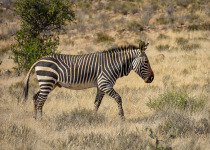
We can also expect to see mammals like Steenbok, Bush Duiker, Springbok, Common Wildebeest, Gemsbok, Greater Kudu, Mountain Zebra, Bontebok, Hartebeest and Common Eland.
In the late afternoon we will return to our accommodation in Cape Town.
We will drive to the scenic harbour town of Simon’s Town, about 45 minutes away. We then hop on our speedboat for a full day on the open sea. We will enjoy a light lunch on the boat.
Our expert skipper and pelagic guide will take us about 25 to 40 nautical miles from the harbour, passing the cliffs of Cape Point, and heading south-west off the continental shelf in search of trawlers. We will venture deep into the nutrient-rich waters of the Atlantic Ocean, where the meeting of the Benguela and Agulhas currents creates one of the most productive marine environments on Earth. These open waters are a magnet for an astonishing diversity of seabirds and marine mammals, many of which are rarely, if ever, observed from land.
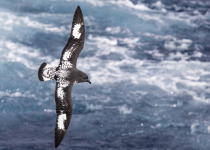
The target bird list reads like a dream for seabird enthusiasts. Among the albatrosses, we will look out for Shy, Northern Royal and Southern Royal, Indian and Atlantic Yellow-nosed and Black-browed Albatross. The petrel and shearwater lineup are equally impressive, with potential sightings of White-chinned, Soft-plumaged, Pintado, Spectacled, Northern Giant and Southern Giant Petrel, and Sooty, Cory’s and Great Shearwater. Other possible species we could see include Wilson’s and European Storm Petrel, Parasitic and Long-tailed Jaeger, Southern Fulmar, Sabine’s Gull, Cape Gannet and more. On top of this, any number of interesting vagrant and rare species may turn up on the day!
Beyond the birdlife, our pelagic trip will allow us to get close to some fantastic mammals. We could see Afro-Australian Fur Seal, Dusky, Long-beaked Common and Common Bottlenose Dolphin, while seasonal visitors may include Southern Right and Humpback Whale, and the elusive Bryde’s Whale.
After an exhilarating day spent at sea on the pelagic trip we return to the comfort of our hotel in the later afternoon for a short siesta.
Overnight Cape Town (Fernwood Manor).
The final full day of birding takes place east from the city, in the diverse landscapes of the Overberg region, beyond the dramatic Hottentots-Holland Mountains. After an early breakfast we make our way to the productive wetlands of Strandfontein Sewage Works, one of the best birdwatching spots in the whole of the Western Cape.
Strandfontein is the best place to see water-based birds close to Cape Town and it has turned up some spectacular rarities over the years. These include Rufous-tailed Scrub-Robin, Temminck’s Stint, Red-necked Phalarope, American Golden Plover, Baillon’s and Spotted Crake, Franklin’s Gull and many more!
Apart from the possibility of seeing something rare, we will drive the extensive dirt road networks amongst the pans and flooded depressions, looking for Greater and Lesser Flamingo, Great White Pelican, Maccoa and Yellow-billed Duck, Southern Pochard, Cape and Blue-billed Teal, South African Shelduck, African Swamphen, Red-knobbed Coot, Common Moorhen, Black-headed Heron, White-breasted and Reed Cormorant, Kelp and Hartlaub’s Gull, Swift Tern, Little and Black-necked Grebe, Pied Avocet, Black-winged Stilt, Spotted and Water Thick-knee, Little Stint, Sand and Brown-throated Martin, Little Rush, Lesser Swamp and Common Reed Warbler, Cape Spurfowl, Zitting Cisticola, Cape Canary, Cape Weaver, Cape Wagtail, African Fish Eagle, African Marsh Harrier and many more.
We then head further east, following the incredibly scenic Clarens Drive, winding along the steep cliffs between the naval town of Gordons Bay and our first destination, the small coastal town of Rooi-Els. Along the way we will make a few stops to take in and photograph the picturesque vistas.
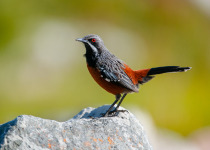
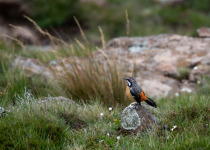
While in Rooi-Els (named after the local Red Alder tree known as rooiels in Afrikaans) we will take a relaxed walk along the lower slopes of the Klein-Hangklip mountain in search of several endemic species such as the Cape Rock Thrush, Ground Woodpecker, Cape Siskin, Cape Sugarbird, Orange-breasted Sunbird, Malachite Sunbird and one of Cape Town’s most alluring endemics, the striking Cape Rockjumper. Also keep an eye out for Verreaux’s Eagle and Rufous-breasted Sparrowhawk overhead.
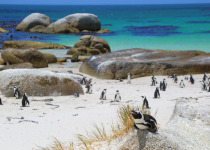
Next stop, the small coastal town of Betty's Bay where we will be taking a short walk to see the African Penguin colony at Stony Point Nature Reserve. This colony is one of only two penguin colonies in the area of the Western Cape. Apart from all the adorable penguins waddling around us, we will keep a sharp lookout for a few special birds along the shoreline such as the Crowned, Cape and Bank Cormorant, as well as chances of seeing the threatened African Oystercatcher.
We will then take a short drive to the beautiful 200 hectare (490 acres) Harold Porter Botanical Gardens, boasting an astounding 172 recorded species. A few of the endemics and near-endemics which we can expect to see with a bit of luck include Jackal Buzzard, Ground and Knysna Woodpecker, Olive Thrush, Cape Rock Thrush, Southern Boubou, Cape Sugarbird, Orange-breasted and Southern Double-collared Sunbird, Cape Bulbul, Cape Weaver, White-backed Mousebird, Cape Siskin, Cape Batis, Cape Spurfowl, Victorin’s Warbler, Grey-backed Cisticola, Forest and Protea Canary, Karoo Prinia, Cape White-eye, Swee Waxbill and many others.
We will make our way back along the scenic coast road back to our accommodation in Cape Town (Fernwood Manor)
We will enjoy a final breakfast at our beautiful hotel, enjoying views of iconic Table Mountain for a last time on this fantastic trip.
After breakfast we will pack our bags and make our way to Cape Town International airport. Here we will say our goodbyes and you will leave on your onward or homeward flight after an amazing South African birding trip.
Locations & map
Open in MapsAvailability & pricing
Included
- All meals and soft drinks
- All accommodations
- Ground transportation in 15 or 22 passenger vehicle
- 1 local guide with 4 - 5 participants, 2 guides (local & EET) with 6 - 12 participants
- All park, conservation and entrance fees
- 4x4 Guided Birding Day Tour up Sani Pass
- Pelagic boat tour from Cape Town
Not included
- Flights to and from start / end location
- Travel and medical Insurance
- Items of a personal nature
- Alcoholic drinks
- Visas (please obtain multiple entry visas for South Africa)