
14 Days Uganda Birding and Wildlife Photography Safari
Uganda western circuit birding and wildlife photography route with Mabamba, Budongo, Kibale, Semuliki, Queen Elizabeth, Bwindi and Lake Mburo.
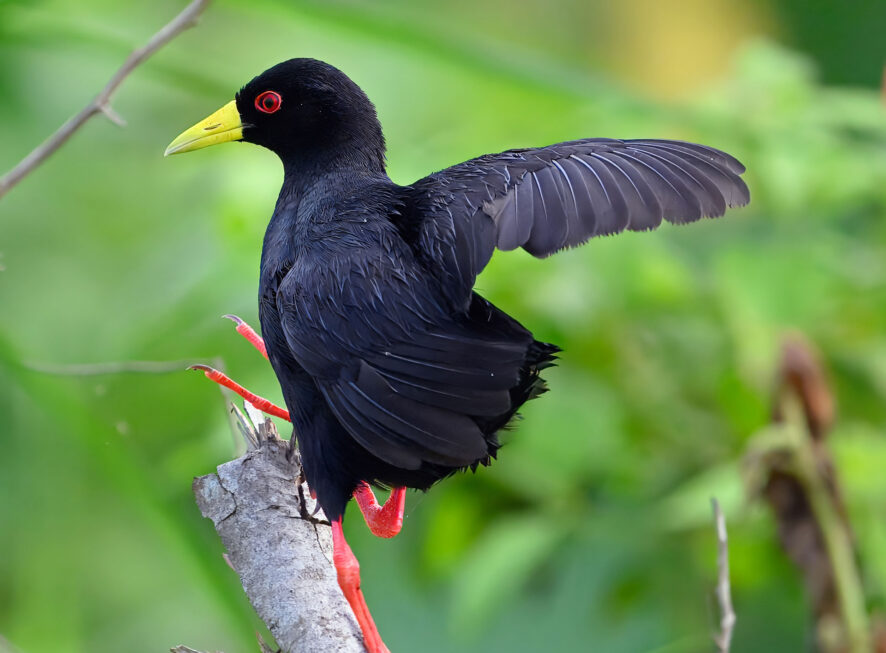

About this tour
This comprehensive 14-day expedition is meticulously designed to cover the most critical hotspots of Uganda’s "Western Circuit," focusing on high-density birding areas and premier wildlife photography destinations. By traversing diverse ecosystems—from the prehistoric papyrus swamps of the Victoria basin to the ancient, mist-shrouded Afromontane forests of the Albertine Rift—this safari offers an unparalleled opportunity to document Africa's most sought-after species. Our expert guides specialize in the nuances of avian behavior and lighting conditions, ensuring that whether you are tracking the elusive Shoebill or the charismatic Mountain Gorilla, your journey is both productive and profoundly educational. This itinerary balances intensive birding with iconic big-game encounters, utilizing specialized 4x4 safari vehicle(s) to navigate the terrain. We pay close attention to your expectations, targeting rare endemics and specific "lifers" to make this a truly fruitful journey through the "Pearl of Africa," a land where the sheer volume of biodiversity remains one of the world's.
This BirdWatch review draft was prepared from a new itinerary document sent by Davis Kibuga on July 28, 2026.
Customer enquiries are routed through BirdWatch first, then forwarded to Davis Kibuga / Wide Birding Eco Tours for confirmation.
Birds you can spot
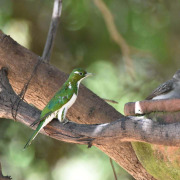
Chrysococcyx cupreus
target
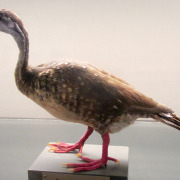
Podica senegalensis
target

Haliaeetus vocifer
target

Crinifer personatus
target
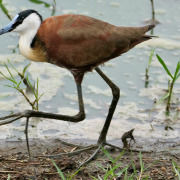
Actophilornis africanus
target
Circus ranivorus
target
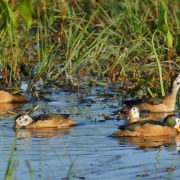
Nettapus auritus
target
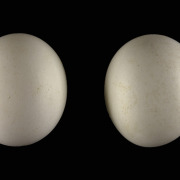
Otus brucei
target

Rynchops flavirostris
target
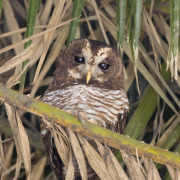
Strix woodfordii
target
Guides
Itinerary ▼
Upon your arrival at Entebbe International Airport, We will transfer to the The Boma Entebbe, a charming retreat offering the perfect blend of colonial history and tropical serenity. After settling in, we head to the nearby Entebbe Botanical Gardens for an exhilarating afternoon of birding. Within these lush, mature grounds, we will scan the canopy and lake shore for the magnificent Great Blue Turaco, Black-and-white-casqued Hornbill, African Grey Parrot, Ross's Turaco, Klaas’s Cuckoo, Red-chested Sunbird, African Open-billed Stork, Pied Kingfisher, Black-headed Gonolek, Swamp Flycatcher, Grey Woodpecker, Yellow-billed Duck, Hadada Ibis, African Wood Owl, and the striking Verreaux's Eagle-Owl. As we walk, keep an eye out for the playful Vervet monkeys and the Mantled Gueraza often spotted in the trees, providing a wonderful introduction to Uganda's wildlife.
We depart early for the world-renowned Mabamba Swamp, a critical habitat for the legendary Shoebill. As we navigate the papyrus channels in local canoes, we will focus our optics on the elusive Shoebill, while also seeking out the Papyrus Gonolek, Blue Swallow, White-winged Warbler, Pallid Harrier, Yellow-throated Greenbul, Yellow-rumped Tinkerbird, Lesser Swamp-Warbler, African Marsh Harrier, Malachite Kingfisher, Long-toed Lapwing, African Jacana, Winding Cisticola, Fan-tailed Widowbird, and the elegant African Fish Eagle. After this exhilarating morning, we embark on a 3.5 to 4-hour scenic drive to Masindi, where we will explore the Nyabyeya tall grasses, an excellent spot for Heuglin's Spurfowl, Red-necked Spurfowl, Lizard Buzzard, Shikra, Wahlberg's Eagle, Black Goshawk, African Goshawk, Helmeted Guineafowl, Blue-spotted Wood-Dove, Tambourine Dove, African Green-Pigeon, Black-billed Turaco, African Emerald Cuckoo, Red-headed Lovebird, and the Little Bee-eater. This area is also very good for special finches and waxbills You will spend the next two nights enjoying the historic atmosphere and comfort of the Masindi Hotel, resting up for the exciting days ahead.
Early after breakfast, we drive a short distance to the Royal Mile, widely regarded as the finest birding track in all of Africa. Historically the leisure spot for the King of Bunyoro, this wide forest road has been maintained to allow for excellent visibility and light, making it a dream for bird photography. Our checklist for the day is prestigious: The Blue-breasted Kingfisher, African Crowned Eagle, Sabine's Spinetail, Cassin's Spinetail, Yellow-crested Woodpecker, Forest Flycatcher, Yellow-browed Camaroptera, Yellow-mantled Weaver, Red-headed Bluebill, Red-tailed Ant-thrush, Slender-billed Honeyguide, Jameson’s Wattle-eye, Blue-throated Brown Sunbird, Uganda Woodland Warbler, and Rufous Flycatcher-thrush. The vertical structure of the forest here is immense, and we will spend time scanning the mid-storey for Ituri Batises and Chestnut-capped Flycatchers. While the focus is heavily on the avian world, we often encounter the Giant Forest Squirrel and various Duiker species crossing the trail. The day is spent immersed in the sights and sounds of the jungle, returning to the historic Masindi Hotel to review our captures and enjoy a quiet dinner in an atmosphere of colonial charm.
We depart Masindi for a 5 to 6-hour drive southward, traveling through a landscape of rolling hills and tea plantations to reach the primate capital of the world, Kibale National Park. This park hosts the highest density and diversity of primates in Africa. In the late afternoon, we will explore the Bigodi Wetland Sanctuary, a community-run project that is a haven for papyrus and swamp-dwelling species. Here, the Great Blue Turaco is the star, but we will also look for the Hairy-breasted Barbet, Western Nicator, Superb Sunbird, Brown-throated Wattle-eye, Grey-winged Robin-chat, Papyrus Gonolek, Black-billed Turaco, White-spotted Flufftail, Yellow-billed Barbet, Joyful Greenbul, Bocage's Bush-shrike, and the Lesser Honeyguide. Bigodi is exceptional for primate viewing; it is common to see up to eight species in a single walk, including the Uganda Red Colobus, Grey-cheeked Mangabey, L’Hoest’s Monkey, Olive Baboon, Black-and-white Colobus, Blue Monkey, and Red-tailed Monkey. We will settle into our lodge located on the edge of the forest, falling asleep to the nocturnal calls of Thomas's Galagos and the distant pant-hoots of chimpanzees. Stay: Chimpanzee Forest Lodge (3 Nights)
A 1.5-hour drive brings us to Semuliki National Park, a remarkable lowland forest that represents the easternmost extension of the Great Ituri Forest of the Congo Basin. This is the only place in East Africa where many West African "guineo-congolian" species can be found. We will spend 6–7 hours birding along the famous Kirumia Trail. Key species include the Black-casqued Wattled Hornbill, White-crested Hornbill, Red-billed Dwarf Hornbill, African Piculet, Zenker’s Honeyguide, Black-chested Cuckoo, Red-rumped Tinkerbird, Rufous-sided Broadbill, Nkulengu Rail, White-bellied Kingfisher, Dwarf Kingfisher, Piping Hornbill, Fire-crested Alethe, Red-bellied Malimbe, and the Grant's Bluebill. The dense undergrowth may also reveal the Swamp Palm Bulbul and the Lowland Akalat. Because this forest is so biodiverse and remote, it offers a sense of true wilderness photography. In addition to the birds, we will look for the De Brazza's Monkey and the Grey-cheeked Mangabey. After an intensive day in the humid lowland forest, we return to the cooler elevations of Kibale for our overnight stay, reflecting on a day that often feels like birding in the heart of the Congo.
We begin at 5:45 AM, and head into the forest to search for the elusive Green-breasted Pitta, a "holy grail" for birders that displays only during the first light of dawn. Following our pitta search, we return for breakfast and then report for Chimpanzee Tracking. Kibale is home to over 1,500 chimpanzees, and our encounter with these Great Apes will be the highlight of the day. As we move through the forest, we will also be birding for the Black Bee-eater, Narina Trogon, Bar-tailed Trogon, Black-billed Turaco, White-headed Wood-hoopoe, Yellow-rumped Tinkerbird, African Pitta, Velvet-mantled Drongo, Petit’s Cuckoo-shrike, African Broadbill, Wilcock’s Honeyguide, White-spotted Flufftail, Western Nicator, White-tailed Ant-thrush, and Afep Pigeon. The primate activity is constant, with Chimpanzees often seen grooming or feeding in large figs, while the L’Hoest’s Monkey might be spotted on the forest floor. The forest also supports the rare Forest Elephant, though they are much shyer than their savannah cousins. This day combines the thrill of high-level birding with the emotional depth of observing our closest living relatives in their natural habitat, providing endless photographic opportunities.
After a final morning birding session around the Kibale crater lakes, we undertake a 3-hour drive to Queen Elizabeth National Park, known as the "Medley of Wonders." This park holds a world-record bird list of over 600 species due to its diverse habitats including savannah, crater lakes, and wetlands. We will be searching for the Martial Eagle, Verreaux’s Eagle-owl, African Skimmer, Papyrus Gonolek, White-winged Warbler, Temminck’s Courser, Black-headed Gonolek, Grey-headed Kingfisher, Broad-billed Roller, Caspian Plover, Kittlitz’s Plover, Red-capped Lark, Brown Babbler, Black-winged Pratincole, and the Secretarybird. The landscape is dominated by the majestic Rwenzori Mountains in the distance, providing a stunning backdrop for wildlife photography. As we enter the park, we will see vast numbers of Uganda Kob, African Elephant, Cape Buffalo, and Warthog. We might even spot Waterbucks and Bushbucks near the lodge. The park’s unique volcanic craters and the expansive Lake Edward and Lake George ecosystems make it one of Africa’s most scenic destinations. We arrive at our lodge in time for an evening sundowner, overlooking the savannah as the nocturnal chorus begins. Stay: Engiri Game Lodge (2 Nights)
Our day starts with a sunrise game drive through the Kasenyi plains, a prime area for lions and raptors. We will look for Ruppell’s Vulture, White-backed Vulture, Lappet-faced Vulture, Bateleur, Black-bellied Bustard, Flappet Lark, Croaking Cisticola, Yellow-throated Longclaw, Pin-tailed Whydah, Mosque Swallow, Grey-crowned Crane, and Harlequin Quail. Mammalian sightings are frequent, including Lion, Leopard, Spotted Hyena, and the Giant Forest Hog. In the afternoon, we take a boat cruise along the Kazinga Channel, a 32km waterway connecting Lake Edward and Lake George. This is one of the most concentrated birding experiences in Africa; we will photograph African Skimmers, Pink-backed Pelicans, Yellow-billed Storks, African Fish Eagles, Malachite Kingfishers, Pied Kingfishers, Gull-billed Terns, and African Spoonbills. The banks are lined with hundreds of Hippos, massive Nile Crocodiles, and Elephants coming down to drink. This boat trip allows for incredibly close-range photography of both water birds and large mammals from the safety of the vessel, making it a highlight for any portfolio. We return to the lodge for dinner, perhaps hearing the iconic "whoop" of a hyena in the distance.
We drive 2 hours south to the Ishasha Sector, the remote southern region of Queen Elizabeth National Park. This area is world-famous for its Tree-climbing Lions, which spend the heat of the day resting in the limbs of ancient Fig Trees. While searching for the lions, we will also bird for the Broad-billed Roller, White-browed Robin-chat, Palm-nut Vulture, Grey Kestrel, African Cuckoo-hawk, Brown-chested Lapwing, Senegal Lapwing, African Wattled Lapwing, Yellow-billed Oxpecker, Stout Cisticola, Trilling Cisticola, and Lesser Masked Weaver. The open savannah here is also home to the Topi, a beautiful antelope not seen in the northern part of the park. After lunch, we continue our journey for another 2 to 3 hours, ascending into the Kigezi Highlands toward Bwindi Impenetrable National Park. As the altitude increases, the temperature drops and the vegetation becomes dense and mossy. We arrive at the Buhoma sector, the gateway to the mountain gorillas. The transition from the hot savannahs of Ishasha to the cool, misty heights of Bwindi is one of the most scenic drives in Uganda, offering views of the "Switzerland of Africa." Stay: Buhoma Community Rest Camp (1 Night)
Today is the momentous Mountain Gorilla Trekking day. After a briefing, we head into the dense, steep forest to find one of the habituated gorilla families. This experience is truly "once in a lifetime," as you observe the gentle giants grooming, playing, and feeding just meters away. While trekking, keep an eye out for the L’Hoest’s Monkey and the Black-fronted Duiker. After our encounter, which can take 3–6 hours, we drive toward the Ruhija sector, stopping at "The Neck"—a narrow corridor of forest connecting the two parts of Bwindi. Here, we will bird for the Black Bee-eater, Cassin’s Flycatcher, Many-colored Bush-shrike, Grey-throated Barbet, Pink-footed Puffback, Petit’s Cuckoo-shrike, Ansorge’s Greenbul, Slender-billed Greenbul, Mountain Wagtail, and Chubb’s Cisticola. Upon reaching Ruhija, the higher altitude provides chances for Albertine Rift endemics like the Regal Sunbird, Blue-headed Sunbird, Archer’s Robin-chat, Mountain Masked Apalis, and Handsome Francolin. The air is crisp and the views across the forest canopy are breathtaking. We settle into our lodge, resting our legs after the trek and preparing for the high-altitude birding to follow. Stay: Bakiga Lodge (2 Nights)
Ruhija is the highest point of the park and is the best place to find the most localized Albertine Rift endemics. We hike down to the Mubwindi Swamp, a trail that requires reasonable fitness but offers the ultimate reward: The African Green Broadbill. This tiny, emerald bird is one of the rarest in Africa. Along the trail and at the swamp, we will seek the Grauer’s Rush Warbler, Handsome Francolin, Ruwenzori Batis, Strange Weaver, Dusky Crimsonwing, Red-collared Mountain Babbler, Chapin’s Mountain Babbler, Grauer’s Warbler, Neumann’s Warbler, Prigogine’s Greenbul, Black-faced Apalis, Stripe-breasted Tit, Grauer’s Cuckoo-shrike, Yellow-eyed Black Flycatcher, and the Dwarf Honeyguide. The forest here is also a sanctuary for the Yellow-backed Duiker and the rare L'Hoest's Monkey. For those preferring a less strenuous day, birding along the bamboo zone and the school trail offers sightings of the Mountain Illadopsis and White-starred Robin. The photography here is dominated by lush greens and misty atmospheres, capturing the essence of the "Impenetrable Forest." This is often cited by birders as the most productive day of the entire circuit due to the sheer number of restricted-range species.
We bid farewell to the mountains and undertake a 4 to 5-hour drive to Lake Mburo National Park, a gem of an acacia savannah and the only place in southern Uganda to see certain species. As we arrive, we conduct an evening game drive that transitions into a night drive. This is the best time to see nocturnal specialists. We will be looking for the Pennant-winged Nightjar (seasonal), Black-shouldered Nightjar, Fiery-necked Nightjar, African Scops Owl, Verreaux's Eagle-owl, African Wood-owl, and the Freckled Nightjar. Lake Mburo is famous for its Leopards, and a night drive offers the best chance to photograph these elusive cats. We also expect to see Spotted Hyenas, White-tailed Mongooses, and both Greater and Lesser Bushbabies (Galagos) reflecting in our spotlights. The park is unique for being the only place in Uganda with Impala, and we will also see Burchell’s Zebra, Topi, Eland, and Cape Buffalo. The transition from the dense rainforests of Bwindi to the open, golden acacia woodlands of Mburo provides a beautiful contrast in our photographic journey. We stay in a lodge with panoramic views of the park’s rolling hills. Stay: Hyena Hill Lodge (2 Nights)
Our final full day of safari starts with a search for the "acacia specials." We will be looking for the Red-faced Barbet, Tabora Cisticola, Green Wood-hoopoe, African Grey Hornbill, Black-lored Babbler, Red-headed Weaver, Greater Blue-eared Starling, Trilling Cisticola, Brown-chested Lapwing, Scaly-throated Honeyguide, Lesser Masked Weaver, White-backed Vulture, and the Crested Spurfowl. In the afternoon, a boat cruise on Lake Mburo is essential to find the elusive African Finfoot and the White-backed Night-heron. We will also see Giant Kingfishers, African Fish Eagles, and Hippos. The park’s mammalian diversity is on full display today, with sightings of Rothschild’s Giraffe (reintroduced), Warthog, and large herds of Zebra. Lake Mburo’s intimate size allows for a relaxed pace, perfect for capturing those final high-quality shots of African wildlife against the setting sun. A final night drive may produce another Leopard or the rare Serval Cat, concluding our wilderness experience on a high note. The park’s peaceful atmosphere and lack of large predators (other than leopards) make it a wonderful place for walking safaris and detailed photography.
On our final day, we enjoy a morning birding session as we exit the park, targeting any species we might have missed. We then begin our 4 to 5-hour drive back to Entebbe. We will make a stop at the Equator Crossing for a photographic opportunity and a chance to browse local crafts. As we approach the Victoria basin, we will stop at various wetlands to look for the Lesser Jacana, African Pygmy-goose, and Carruther’s Cisticola. We reach Entebbe in the late afternoon, where a day room or a final dinner can be arranged before your international departure. Number of Guests 3 4 5 6 Cost Per Person (USD) 6880 5770 5340 4880
Locations & map
- Entebbe - Entebbe Uganda (Uganda western circuit birding and wildlife photography route with Mabamba, Budongo, Kibale, Semuliki, Queen Elizabeth, Bwindi and Lake Mburo.)
Availability & pricing
Availability: Available on request · Season: Available dates and best season should be confirmed with Davis Kibuga.
Included
- Accommodation as specified - Confirm exact details with Davis Kibuga.
- Professional bird guide - Confirm exact details with Davis Kibuga.
- Ground transportation - Confirm exact details with Davis Kibuga.
- Park and conservation fees where listed - Confirm exact details with Davis Kibuga.
- Meals as per itinerary - Confirm exact details with Davis Kibuga.
- Airport transfers - Confirm exact details with Davis Kibuga.
- Drinking water during tour days - Confirm exact details with Davis Kibuga.
Not included
- International flights - Confirm exact details with Davis Kibuga.
- Visas - Confirm exact details with Davis Kibuga.
- Travel and medical insurance - Confirm exact details with Davis Kibuga.
- Tips and gratuities - Confirm exact details with Davis Kibuga.
- Personal expenses - Confirm exact details with Davis Kibuga.
- Optional activities or extras not listed - Confirm exact details with Davis Kibuga.
Transport & stays
- Private 4x4 safari vehicle Itinerary documents specify ground transportation with a professional bird guide. Exact vehicle and pickup logistics should be confirmed before booking. | Meet: Airport or hotel pickup point to be confirmed through BirdWatch inquiry follow-up. | Pickup: Airport transfer is listed in the supplied itinerary material where applicable.
Policies & FAQ
Cancellation Policy
Payment Terms
Insurance & Safety
Are the dates and prices final?
Please confirm current dates, availability, group size and price through the BirdWatch inquiry form before booking.
How are enquiries handled?
BirdWatch receives the enquiry first and forwards it to Davis Kibuga / Wide Birding Eco Tours for confirmation and follow-up.